Of Cows, Corn, and Re-Joy

Have you ever wanted to take the beauty, peace, or joy of a moment, and store it away for a day of less beauty, peace, or joy? I have. Moments with family and friends, or that moment of beauty on a mountain top. Storing moments to unpack when the days are dark, lonely, or painful.

Joseph’s life, as he lingered in an Egyptian prison, is radically changed after he intrepretes two dreams for pharaoh. One involved seven plump cows, and seven lean cows. The other, seven plump ears of corn, and seven thin ears of corn (Gen. 41:1-6). In both dreams the bad devoured the good.

As Joseph tells pharaoh, the two dreams are in fact the same dream. Seven years of plenty will be devoured by seven years of famine. If nothing is done, death will result. If they take heed, life will once again flourish. What to do? Joseph answers: in the years of plenty, store up a surplus for the years of famine (Gen. 41:34-37).

What is the lesson here?

The plump cows and ears of corn, the years of bounty, are not gone when the dark, lean times are upon us. Joseph’s interprets carefully. The plump cows, and the full ears of corn, then the lean cows, and thin, underdeveloped ears of corn. What does this tell us? There is an expiration date for the years of famine: at the end of seven years. When we recognize the good that we are blessed with, when the dark, lean times find us, we should remember Joseph, why? Simple. The fruit of the good is present, even in the hardship. The hardship will not endure forever, as the good that is to come is caught up in that same unfolding of time.

By faith in Messiah we greet each day with this knowledge:

זֶה-הַיּוֹם, עָשָׂה יְהוָה; נָגִילָה וְנִשְׂמְחָה בוֹ

“This very day is made by the Lord, let us rejoice and be glad in it” (Ps. 118:24, personal translation).

Psalm 118 seems to be a celebratory liturgy envisioning one’s entry into the House of God. Deliverance from captivity, from enemies, renewal of strength and hope, as the celebrant reflects on the Lord’s enduring mercy. Abiding is the message. And this abiding message is the backdrop for another reminder of joy: “These things I have spoken to you, that my joy may be in you, and that your joy may be full” (Jn. 15:11).

Just before Yeshua/Jesus warns us of the difficult days (Jn. 15:18-25), He connects us as branches to His vine bringing forth fruit (Jn. 15:1-17) in an abiding love. His abiding love is the fullness of His joy stored away in us.

Yeshua speaks of the fruit of abiding before the famine of tribulation, abiding in love and obedience. Why? For the very reason Joseph spoke of the plump cows before the thin cows. The lean, dark times will not endure; but as they wear on the storehouse of His abiding fruit now filling us is the source of our “rejoicing.” The prefix “re” of “rejoicing” means: back to the original, once more, or again. It denotes a turning back to, in this case, joy, specifically His joy.

When Yeshua spoke to us of the fruit before the famine, He filled our storehouse with His joy, and the Holy Spirit comes as the Helper to “remind you of everything that I said to you” (Jn. 14:26). He will “re” mind, or turn back our minds to the words of Yeshua, and, Lord willing, we will remember His abiding presence in us, as His temple (cf. Ps. 118), and our abiding, fruitful connection to Him, coupled with joy in every circumstance, as Paul wrote, “rejoice always” (I Thess. 5:16), or always turn again to joy. Why? The light, Yeshua, has not been overcome by the darkness (Jn. 1:5).

Joseph prepared a heathen despot to survive the dark time of famine, and the Lord used Joseph’s position to save His people. Surely, the time of trial we are facing is part of “This very day is made by the Lord …” in order to what, “let us rejoice, or re-joy” turning again to the fruitfulness of Messiah’s abiding joy in us.

The Holy Spirit will bring to remembrance His Words. He will also bring to remembrance our days of joy. He will do so from the good storehouse that the Father has filled. He will do so in order that we not lose heart and fall victim to the famine of hopelessness and despair. There is a new day coming, and His faithfulness will supply all our need until that glorious day (Phil. 4:19).

Be well. Shalom; and Hanukkah Sameach!

The Servant Candle

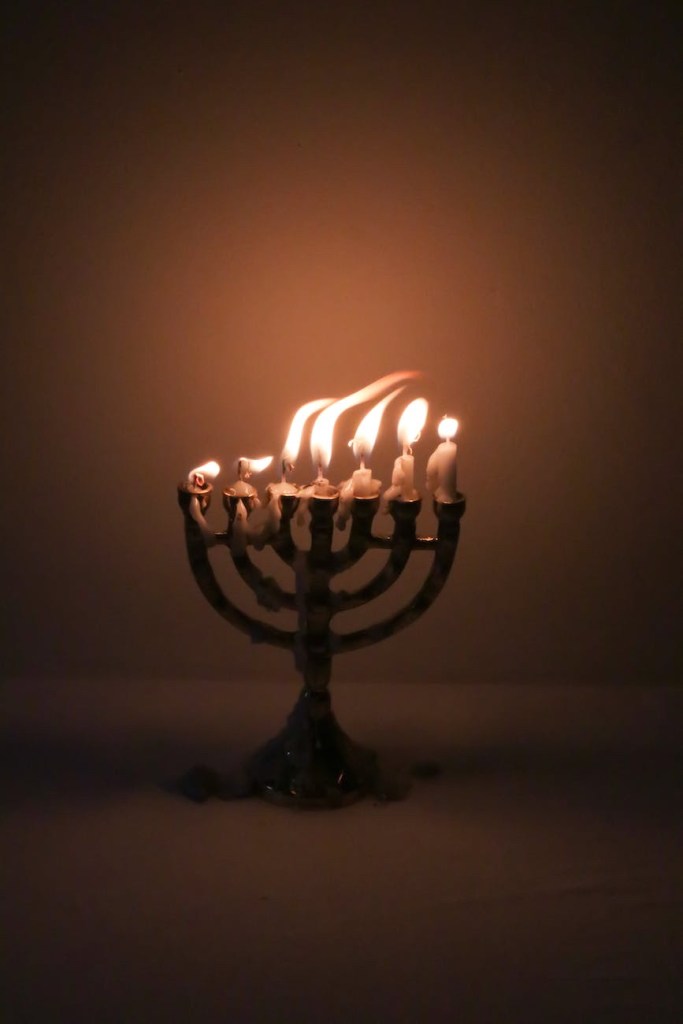
The Shamash candle, used to light the candles of the Hanukkah Menorah, is not counted, or recognized, and has no special blessing associated with it. Its purpose is to serve.

Messiah Yeshua/Jesus came as the suffering servant (Isa. 53). The life in Him is the light of life for those who receive Him (Jn. 1:4, 12-13; Matt. 5:14). He exampled for us righteousness, truth, purity and holiness; and in Him we discern, receive, and reflect His light to the world (Matt. 5:15-16).

He modeled for us servanthood, as He gave completely. So as we use the servant light over these eight nights, let us meditate on the miracle of His life touching and transform our lives and the lives around us; and as we imitate Him, we serve as He served, and we do so for the blessing of each candle, on each night, leading to that new beginning in the lives reached by His wooing Spirit.

“ … Not so with you. Instead, whoever wants to become great among you must be your servant, and whoever wants to be first must be your slave — just as the Son of Man did not come to be served, but to serve, and to give his life as a ransom for many” (Matt. 20:26-28).

Without the Shamash no other candle will be lit, and the miracles cease. It quietly does what it has been purposed to do, and illuminates the miracle for others. Who lights the servant candles today but Yeshua/Jesus Himself. In Him not only do we receive the miracle, but we serve, humbled, unnoticed, as His blessing shines forth across the generations.

The servant candle can be summed up in the words of Yeshua: “Freely you have received, freely give” (Matt. 10:8).

Happy Hanukkah.

Hanukkah: Renewal Miracle

The reference to Hanukkah – or the Feast of Dedication – in John 10:22 is one of the oldest references in to it, and the only one found in the Bible. In brief, Hanukkah remembers the defeat of Antiochus Epiphanies by a ragtag army of priests and pious Jews under the leadership of Mattitayhu (Mattathias) Maccabee, and after his death, his son Judah Maccabee.

Antiochus IV Epiphanies outlawed Jewish life, tradition, and the Torah. In 186 BCE he desecrated the Temple after he found no image of a god set in the Holy of Holies, erecting a statue of Zeus with his own face carved into the statue, and sacrificed a pig upon the Altar of God. Yet, even against insurmountable odds, the Jewish people rose up, and ultimately defeated the most powerful army on earth at the time.

Mattatyahu (Mattathias) Maccabee believed with the same faith of Abraham. He acted in faith when he could not look to the Temple, as it was desecrated. His faith would inspire his sons, particularly Judah, as he would help lead this revolt for three years. Where did they find their strength? They knew that the Lord was with them, as He had promised to never leave them nor forsake them (Deut. 31:6). The war was won, except for the battle.

The “Maccabees” acted upon the hope that the Temple would be rededicated, and against all human odds, when the Jewish people regained control of the Temple, it was once again dedicated to His service. As you might imagine, the Temple was a mess, not only spiritually, but physically. In order to rededicate the Temple they needed holy oil, but it had been destroyed. Or had it? They looked, and they found. I wonder, why did they look for sealed holy oil beneath the debris of the broken containers? Can you imagine the mess left behind by this army of desecration? I would not imagine that they carefully broke the sealed containers of holy oil.

Their search shows the hope they were acting in, as I’ve oft said: hope takes hold, and faith holds on. They took hold of the hope that set the Temple back in their hands, and in that hope the Lord provided a miracle: eight days and nights of light. The oil burned but was not consumed until that final day, when the new oil was prepared, and the miracle faded.

Hanukkah comes from the verb root חָנַך, meaning “to initiate, to discipline, dedicate and train up.” Proverbs 22:6 says, “Train up (dedicate) a child in the way he should go, and even when he is old he turns not away from it.” This definition of חָנַך, is secondary to the primary meaning of חָנַך, meaning “to narrow.” From the time a child is born until their adulthood, we as parents are to raise them, train them, discipline them in order to prepare them for the years ahead; metaphorically, we are narrowing them, removing what is unnecessary, and refining what is necessary.

This is the same process we undergo as disciples of Messiah. He narrows us, along the narrow way, as we read, “Enter through the narrow gate; for the gate is wide and the way broad that leads to destruction, and those who enter through it are many. How narrow is the gate and difficult the way that leads to life, and those who find it are few” (Matt. 7:13-14).

There are two traditions regarding the kindling of the Hanukkiah. One of the house of Hillel, still followed today, the other from the house of Shammai. Hillel said that for each night of the miracle, we should increase light in the world. Shammai said that for each night of the miracle, we should decrease light. The kindling of the Hanukkiah is a visible, public event: light going out. Hillel believed that the light shown in the public square should increase. Shammai, concerned with a disappearance of the Jewish people, believed the light should retract into one, representing the relationship between the Lord and the Jewish people. In a sense, both are right. The light of heaven should increase, but the unique relationship between the Lord and His people should remain intact. What is the answer?

The Festival of Hanukkah is the beautiful history of the victory of light over darkness. Hanukkah has deep roots in the Torah, the idea of spiritual dedication to the Lord, and the kindling of the lights of the Menorah in the Tabernacle. Yet, there is a profound, and wondrous connection between the celebration of Hanukkah, and light itself. At the beginning of creation, when the world is:

וְהָאָרֶץ, הָיְתָה תֹהוּ וָבֹהוּ, וְחֹשֶׁךְ, עַל-פְּנֵי תְהוֹם

“And the earth formless and empty, and darkness was on the face of the deep.”

The Lord declares: “let there be light.” This is not an act of creating, but of revelation. From the beginning light overcame darkness, by the spoken Word of God. Hanukkah, the Festival of Light, begins every year on the 25th of Hebrew month of Kislev. To see how the Lord foreshadowed this victory of light over darkness remembered at Hanukkah, one would simply count to the 25th word of the Torah scroll – אוֹר/ohr, light – and see that from the beginning light has always been triumphant.

At Hanukkah we kindle light, fire, and increase light in the world, recognizing the exclusive relationship that we have with the Lord. The author of Hebrews explains in 1:7, “And of the angels indeed He says, ‘Who is making His angels spirits, and His servants a flame of fire.’” λειτουργός/leitourgos, servants here meaning minister, priest, one busy with holy things, servants of the king. The Lord sees you as a flame of fire, light overcoming the darkness in Messiah Yeshua/Jesus, who stands in our midst (Rev. 1:12-13), as we minister to those who are suffering as in darkness, formless, and feeling empty.

As the Messiah dedicates us, refining and narrowing, His light increases as we decrease; becoming, even a living representation of both rabbinic opinions cited above. We shine in the public spaces, but we must never be overcome by the influence of darkness. We are a flame of fire on the holy Menorah, dedicated to overcoming the darkness, through the fire of the Holy Spirit, to the glory of God by His Son. As we are kindled, and rekindled, year after year, the miracle does not fade, it is continually renewed. Amen.

Be well. Shalom. And Hanukkah Sameach!