Living Stones: Built Upon the Messiah

“As you come to him, a living stone rejected by men but in the sight of God chosen and precious, you yourselves like living stones are being built up as a spiritual house, to be a holy priesthood, to offer spiritual sacrifices acceptable to God through Jesus Christ” (1 Pet. 2:4–5).

Throughout Scripture, stones often mark places of holy encounter. Jacob erected a stone pillar at Bethel after dreaming of the ladder reaching into heaven while resting his head upon a stone (Gen. 28:11, 19). Israel gathered memorial and set stones after crossing the Jordan so future generations would remember the faithfulness of the Lord (Josh. 4:8-10). The Temple itself was constructed of carefully prepared stones, each fitted into its appointed place (1 Kgs. 6:7). Yet Peter employs the image of stone in a way that reaches beyond our monuments and buildings. He declares that the faithful in Messiah are themselves “living stones.”

Peter’s “living stones,” while strange to our ears, is comparable to imagery used in other first-century Jewish sects. The Qumran sect described their community as a temple, or a מִקְדַּשׁ אָדָם/mikdash adam, temple of men because they had withdrawn from the corruption of Jerusalem. Still, Peter’s unique expression captures both our identity and our purpose. A stone is normally cold, lifeless, and stationary. Yet Peter speaks of stones that are alive because they have come to the One who is the Living Stone, with life now flowing from Messiah to His people. As branches draw life from the vine, believers draw life from the risen Lord (Jn. 15:1). The faithful are not just individuals who happen to share similar beliefs. They are living stones joined together into a spiritual house, a dwelling place for the presence of the Living God.

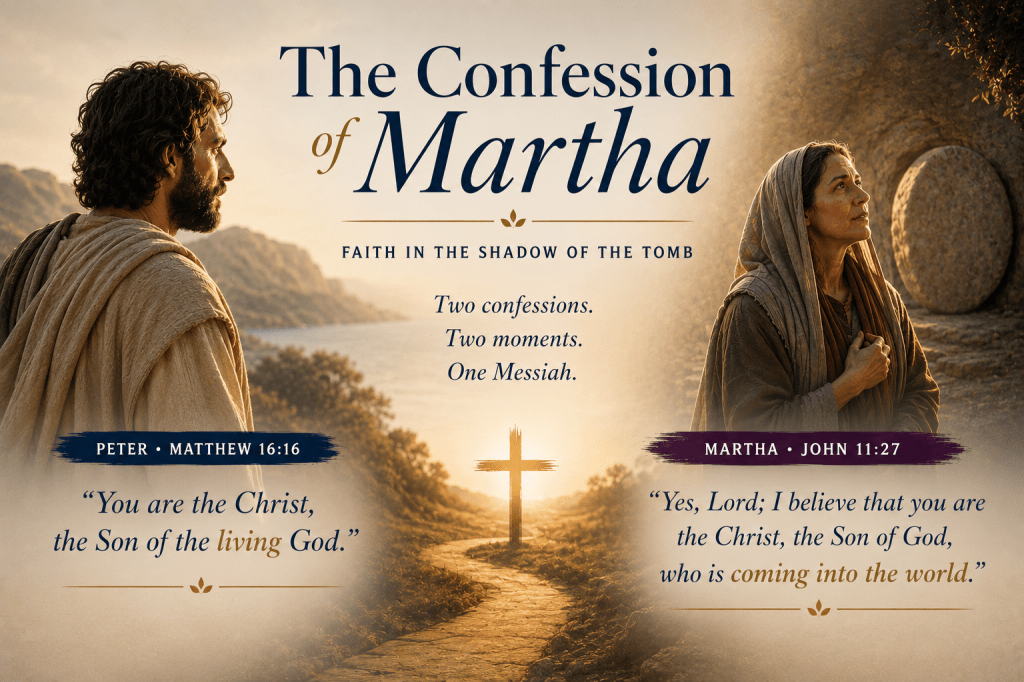
Peter’s language is especially significant when viewed against the backdrop of his own encounter with Yeshua at Caesarea Philippi. There, Yeshua asked His disciples, “Who do you say that I am?” Peter answered with one of the most profound confessions in all of Scripture: אַתָּה הוּא הַמָּשִׁיחַ בֶּן־אֱלֹהִים חַיִּים, “You are the Messiah, the Son of the living God” (Matt. 16:16).

Peter recognized that Yeshua was not simply a prophet, teacher, or miracle worker. He was the promised Messiah, the divine Son sent by the Father.

Yeshua responded by affirming the supernatural origin of Peter’s confession and then declared, “Upon this rock I will build My church, and the gates of Hades shall not prevail against it” (Matt. 16:18). Much discussion has surrounded the meaning of His response through the centuries, but one truth stands clear: the ekklesia of Messiah is built upon the revealed truth of who Yeshua is. Peter’s confession becomes foundational because it identifies the true cornerstone of the Father’s redemptive work.

The ekklesia is not built upon human personalities, institutions, traditions, or programs. It is built upon the Messiah Himself. Every living stone derives its significance from its relationship to Him. Remove the cornerstone, and the building collapses. Remain connected to the cornerstone, and the structure stands firm.

Paul develops this same imagery in Ephesians 2:20, describing believers as being “built on the foundation of the apostles and prophets, Messiah Yeshua Himself being the chief cornerstone.” The cornerstone was the most important stone in an ancient building. It established alignment, direction, and stability for the entire structure. Every other stone was measured in relation to it. So just as the stones of the Temple were prepared and fitted according to the divine pattern, the Lord is shaping His people into a dwelling place for His presence.

This means that the faithful do not define truth or their identity according to culture, personal preference, or the changing spirit of the age, often weaponized by the enemy. We take our alignment from Messiah. Our values, priorities, convictions, and conduct are measured against Him, not society. The world may reject Him, just as Peter says He was “rejected indeed by men,” but the Lord’s verdict remains unchanged: He is “chosen by God and precious.”

The same pattern often unfolds in the lives of those who follow Him. Living stones frequently experience rejection because we are identified with the rejected Stone (Ps. 118:22). The ethics of the Kingdom rarely fit comfortably within the values of the world. Faithfulness to Messiah will lead to misunderstanding, criticism, opposition, even persecution. Nevertheless our worth is not determined by the opinions of men. Like our Lord, we are chosen and called by the Father for His purposes.

Still, there is another important aspect of Peter’s imagery. Living stones are not intended to remain isolated. A single field stone lying alone on a hillside serves little purpose. The beauty and strength of a building emerge when individual stones are joined together according to the architect’s design. Peter says believers “are being built up” into a spiritual house. The Christian life was never intended to be a solitary journey.

Modern culture often celebrates radical individualism and autonomy, but Scripture emphasizes covenant community. The Lord gathers living stones and fits them together. Each stone is different in shape, size, and function, yet each has a place in the structure. Some stones are highly visible; others remain hidden. Some carry great weight, while others fill supporting roles. Yet every stone contributes to the integrity of the whole. Every stone is needed. 

This truth challenges us to value one another as the Lord values us (Phil. 2:3). The living stones around us are not obstacles to endure but gifts to embrace. We need one another. The Lord shapes us through relationships, service, worship, encouragement, and even through the occasional friction that occurs when stones are fitted together. The Lord knows exactly where each stone belongs.

Peter also reminds us that these living stones form a holy priesthood (1 Pet. 2:9). We are not just building materials; we are worshipers. Our lives become spiritual sacrifices offered to the Lord through Messiah. Every act of obedience, every prayer uttered in faith, every deed of love, and every expression of worship becomes part of our priestly service before the Lord. The spiritual house God is constructing is not a physical sanctuary made with human hands. It is a living temple composed of redeemed men and women from every tribe, tongue, people and nation (Rev. 7:9).

What a privilege it is to be included in His holy work. All who were once far away have been brought near. All who were once disconnected have been joined to the household of God. All who were once spiritually lifeless have become living stones through union with the Living Stone.

Therefore, let us hold fast to Peter’s confession: “You are the Messiah, the Son of the living God.” Let us remain properly aligned with the chief cornerstone. Let us embrace our place within His spiritual house. And let us remember that our identity is not found in worldly status, personal achievement, or human approval, but in the One who has called us into His eternal purpose.

The world sees scattered stones. The Lord sees a temple under construction. Stone by stone, life by life, He is building something that will endure forever. Every faithful believer who trusts in Messiah is part of that glorious structure, a living stone in the house of the living God.

Maranatha. Shalom. 

The Beauty of Shared Devotion

At the close of Parashat Nasso (Numbers 7), the leaders of the tribes of Israel come before the Lord with offerings for the dedication of the altar. For twelve days, each prince brings the very same gift. Scripture carefully repeats each offering in full, tribe after tribe, without alteration or abbreviation. At first glance, the repetition can seem unnecessary. Why did they all bring identical gifts? Why not allow each tribe to distinguish itself with something unique or greater?

The sages addressed this very question, as they viewed the identical offerings not as repetition, but as a sign of spiritual unity among the tribes, with each leader honoring the others rather than seeking distinction for himself.

This is a beautiful picture of the people of God, almost idyllic. In a culture often driven by comparison, recognition, and personal distinction, the princes of Israel chose another path. They did not compete for prominence before the Lord. They did not attempt to outshine one another. Instead, they honored the sacred unity of Israel’s worship.

Even more striking, Numbers 7 opens by saying, וַיְהִי בְּיוֹם כַּלּוֹת מֹשֶׁה לְהָקִים אֶת־הַמִּשְׁכָּן “And it came to pass on the day that Moses set up the tabernacle…” (Num. 7:1). Though the offerings were brought over twelve days (Num 7:10-11), the Torah regarded them as one unified act of devotion. Heaven saw not twelve competing tribes, but one people with one heart.

There is a lesson here for every congregation, ministry, and believer.

Our service before the Lord is not a competition, although it often feels like it. The Kingdom of God is not advanced through rivalry, envy, or the need to be seen above others. True spiritual maturity rejoices when others serve faithfully. Unity in the Spirit is itself an offering pleasing to God, and it is a revelation of Messiah’s prayer in John 17.

The Apostle Paul later echoes this same truth when he writes that there are many members, yet one body (1 Cor. 12:12). Different callings do not diminish unity; they strengthen it when surrendered to the Lordship of Messiah.

The enemy delights in comparison because comparison breeds pride in some and discouragement in others. But the Spirit calls us into mutual honor, shared devotion, and common purpose. Sometimes the holiest thing we can do is faithfully bring our offering without needing it to be greater than someone else’s.

The princes of Israel remind us that the Lord values harmony among His people. When hearts are united in humble devotion, the Lord receives the service of each as a blessing shared by all.

May we learn to serve with that same spirit of humility — not striving to outshine one another, but walking together in the unity of His Spirit, offering our gifts with faithfulness, humility, and love. 

Maranatha. Shalom. 


Even the AshesLessons From Shoelaces

In Leviticus 6:3 we read: “The priest is to put on his linen garment, with his linen undergarments on his body. He is to remove the ashes from where the fire has consumed the burnt offering on the altar and put them beside the altar.”

This is an important, even an impressively mundane detail: clean the ash. But as we know from Scripture, there is deep meaning in what is often overlooked. 

Most people are familiar with the visible duties of pastoral ministry, yet behind those public expressions exists a multitude of small, seemingly unrelated, and often mundane tasks that quietly sustain the visible work of the pastoral vocation. Even those unseen details, when done in service to the Lord, are holy.  The same could, of course, be said for most vocations. Nevertheless, we are all looking for significance, but what if the reminders of it were right before us? 

There is a tradition within rabbinic Judaism that one ties the left shoelace before the right. Most of us would probably struggle to believe that the Lord is overly concerned with which shoe we tie first. Perhaps the point is not the shoe itself, but the heart behind the act, and the reminder attached to it. 

Biblical faith does not divide life neatly into the “holy” and the “ordinary.” In many other religious systems there is sacred work, and then there is everything else. Yet Scripture presents a different vision. The apostle Paul writes: “And whatever you do in word or deed, do all in the name of the Lord Yeshua, giving thanks to God the Father through Him” (Col. 3:17).

Faithfulness transforms even the smallest act into an offering unto the Lord. Tying a shoe, preparing a meal, cleaning a room, carrying a burden for another person, all of life may become worship when lived with intentionality before Him.

In fact, the act of putting on one’s shoes can be meaningful. In order to tie your shoes, you must first put them on. For the right-handed, the right shoe is put on first, then the left (reversed if left-handed). The custom of tying the left shoelace first was connected to the wrapping of tefillin (phylacteries) upon the left arm. The ordinary act of dressing became a reminder of covenant devotion expressed through the laying of tefillin. Even an insignificant shoelace can call the hearts attention back to the Lord.

This same principle appears in the service of the Tabernacle.

In Leviticus 6:13 the Lord commands that the fire upon the altar was to burn continually. But in order for the fire to keep burning, the ashes had to be removed. Day and night, priests cleared away the remains of what had already been consumed. If you have ever heated with wood or tended to a camp fire, you understand this principle. In the morning service of the Temple, the ashes were placed at the base of the altar. Later, after the priest changes his garments, the ashes were placed outside the precincts of the temple (Lev. 6:10-11).

The Talmud, in Yoma 21a, speaks of a miracle concerning the Golden Altar and the Menorah: “Abaye said: The crop and feathers of sacrificial birds, and the ashes of the inner altar, and the ashes of the candelabrum, which were not removed to the place of ashes outside the Temple like the ashes of the outer altar, were also swallowed in the earth in their places.”

The ashes of the Golden Altar and the Menorah, the remnants of worship, prayer, and light, were received by the earth before the Lord. These “remnants” did not go to waste. Even the remnants belonged to the Lord. This was a miracle few would ever see, but it reminded the serving priests of the sanctity of their work.

The work of sacrifice was not glamorous. It was bloody, smoky, dusty labor. The priests did not casually stand in grandeur before the altar; they cleaned it. They carried ashes. They maintained the fire. Yet not one duty was insignificant.

The Hebrew word often translated “ashes” is דֶּשֶׁן (deshen), a word also connected to richness, fatness, and abundance. It shares the same root as the word “anoint” in Psalm 23:5, “You anoint my head with oil.” In Leviticus 6, these are the “fat ashes,” the remains of what had belonged wholly to the Lord. In the sacrificial system, the fat was the choicest portion. It represented delight, fullness, and offering. After the flames consumed the sacrifice, what remained still belonged to Him. Even the ashes were holy. What we consider remnants, God still claims as His own. Nothing that it His goes to waste. 

There is something deeply comforting in that truth. So much of life feels unnoticed, with quiet acts of service disappearing into the routine of daily living. Meals are cooked and forgotten. Floors are swept again and again. Bills are paid. Prayers are whispered. Burdens are carried silently. Many labor faithfully with little recognition. Yet there in the remnant of yesterday’s service, even that which is cleaned away, there is holiness. 

The Lord sees the unnoticed faithfulness of His people.

We see this again in the life of Timothy. Timothy was not just an assistant of an apostle. He was a disciple of Paul, entrusted with leadership and pastoral oversight. He was a man of position and prominence. Two epistles bear his name and preserve Paul’s encouragement to persevere in faithfulness. Yet near the end of Paul’s life, we encounter an almost mundane request:

“When you come, bring the cloak which I left with Carpus in Troas, along with the scrolls, and especially the parchments” (2 Tim. 4:13).

Bring my cloak. Bring my books. Bring the parchments. At first glance, it almost sounds beneath Timothy’s calling. But Paul understood something we often forget: there is no act of faithful service that is too small in the Kingdom of God.

Timothy’s errand would warm an imprisoned apostle, preserve the study of the Scriptures, and perhaps help give birth to words that would strengthen generations yet unborn. The Kingdom often advances through simple acts of obedience that seem unimpressive in the moment. Timothy’s assignment was not unlike the priest carrying ashes from the altar: quiet, practical service that nevertheless sustained the work of God.

Someone must carry the ashes. Someone must tend the fire. Someone must cook the food. Someone must bring the cloak and the scrolls. And the Lord, who receives even the ashes of the Golden Altar, does not overlook a single act done faithfully unto Him. The Lord has filled even ordinary things with reminders to lift our daily service unto Him, even the laces of our shoes. Perhaps today the holiest things before you is not a great moment of spiritual triumph, but the quiet faithfulness of carrying ashes and tying your shoes. 

Maranatha. Shalom.