In this teaching from Deuteronomy 29:10-15, we explore why ordinary work, ordinary seasons, and ordinary acts of obedience matter when we are standing before the Lord. Give a listen.

In this teaching from Deuteronomy 29:10-15, we explore why ordinary work, ordinary seasons, and ordinary acts of obedience matter when we are standing before the Lord. Give a listen.
Kindness is a unique way of imitating the Messiah. What are some of the ways the Lord has shown us kindness, and what do we learn from this? Give a listen.
“Your servant my husband is dead, and you know that your servant feared the Lord, but the creditor has come to take my two children to be his slaves,” (2 Kgs. 4:1; cf. 4:1-7).
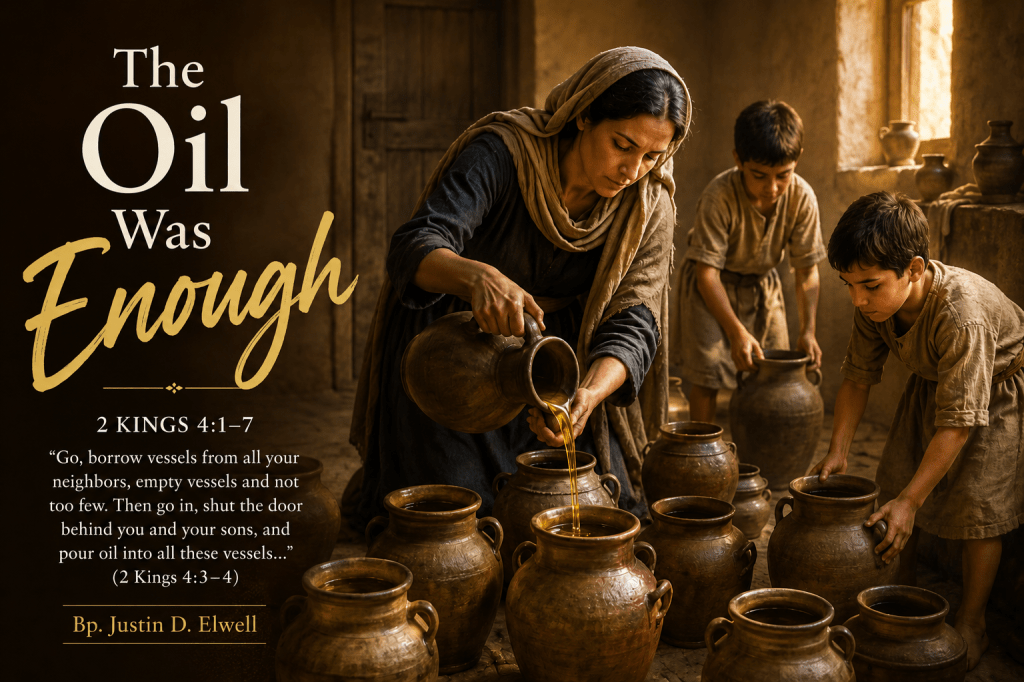
There are passages of Scripture that appear simple on the surface but reveal something profound about the character of the Lord when we slow down and listen to the text. 2 Kings 4:1-7 is one of the passages. I’ve taught on this portion several times over the years, both at home and abroad. A widow is facing a debt that she cannot repay, placing her sons in danger of being taken as servants, and there seems to be no answer to her situation. Yet in the midst of her desperation, the prophet Elisha asks a remarkably simple question after hearing the widow: “What do you have in the house?”
This is the widow of a man who had been the prophet’s servant. His death left his family in debt. What we note is that her faithfulness, even her husband’s service to the Lord did not make them immune to hardship. That is vital for us to remember. Sometimes faithful people find themselves in circumstance they never anticipated. Sometimes the faithful cry out to the Lord from places of genuine need. The widow does exactly that.
She tells Elisha that the creditor has come. The Hebrew reads: הַנֹּשֶׁה בָּא, hanahosheh ba, “the creditor has come.” This isn’t an abstract financial obligation somewhere in the background. The creditor has arrived. Her crisis is immediate and personal. She has nowhere to turn, and no resources with which to answer the demand.
But Elisha’s first question isn’t, “How much do you need?” He asks, “What do you have in the house?” מַה־יֵּשׁ לָךְ בַּבָּיִת, mah yesh lakh babbayit. That question changes the direction of the story. The widow looks at the remnants of her life and says, “Nothing, except a jar of oil.” The Hebrew phrase, כִּי אִם, ki im, “except” or “but only,” reveals how she regarded what remained. It was very little. It was insufficient. In was, in fact, almost nothing.
But the Lord often begins with the thing we have already dismissed as insignificant. The widow sees “only” a little oil. The Lord sees the beginning of provision and deliverance.
Elisha then tells her to borrow vessels from her neighbors. But he gives an unusual instruction, “Go outside, borrow vessels from all your neighbors, empty vessels and not too few…” כֵּלִים רֵקִים אַל־תַּמְעִיטִי — kelim reqim al-tam’iti, “empty vessels, do not diminish [their number].” The vessels are empty, but their emptiness is not a disqualification. They are precisely what is needed to receive the provision of the Lord.
There is a word of hope here for us. We sometimes think that we must come before the Lord already filled, with strength, answers, resources, confidence, and certainty. Yet the Lord is not intimidated by our emptiness. An empty vessel can still be filled. A weak person can still be used. A small resource can still become sufficient in the hands of God.
And notice that Elisha does not simply give the woman money. Why not? This could have solved the issue quickly. The Lord could have caused someone to arrive with the necessary funds. Instead, the Lord involves her in the miracle. She must gather the vessels, bring them into the house, shut the door, and begin to pour.
There is something deeply personal about this miracle. Elisha tells her, “Shut the door behind you and your sons.” There will be no crowd watching. This is no public spectacle. The miracle takes place behind a closed door: a mother, her sons, empty vessels, and a little oil. Some of the Lord’s deepest works in our lives happen in places no one else can see. Not every miracle is meant for public display. Somethings the Lord meets us quietly, personally, and faithfully in the hidden places of our lives.
Then she begins to pour. She does not manufacture the oil. She does not create something she does not possess. She simply pours out what she has been given. The Hebrew verb יָצַק, yatsaq, “to pour,” is central to the action. She pours, and the oil continues.
This raises an intriguing question: Why didn’t she go beyond the village and get more vessels? The text does not tell us why, and we should not pretend that it does. Perhaps she gathered what she thought would be enough. Perhaps she gathered what she could fit behind closed doors. Perhaps she could not imagine what the Lord was about to do? The story does invite us to notice something: the oil continues until there is no more vessels.
Elisha had told her, “Do not make them few.” The limitation is not presented as a lack of oil. The vessels available to receive it became the boundary of the miracle. This is not a formula for material prosperity, nor does Scripture teach that God will give us everything we can imagine if we simply exercise enough faith. Rather, the story reminds us not to place limits on the Lord’s faithfulness based upon our own expectations.
Faith does not mean pretending that our needs are not real. The widow’s debt was real. Her sons were at risk. Her circumstances were desperate. Faith means bringing what is real before the Lord Who is greater than what is real.
Perhaps this is why the Lord did not simply give her the money. If Elisha had handed her the money, she would have experienced relief. But through the miracle, she learned something more enduring: the God of Israel could take what she had and make it sufficient for what lay before her.
That principle comes to the full in Messiah. Again and again, we see that the Lord’s kingdom does not operate according to human calculations of sufficiency. A few loaves and fish feed a multitude. A mustard seed becomes a great plant. What appears insufficient becomes an instrument of the Lord’s purpose. In Messiah, we learn that our hope does not rest upon the abundance of what is in our hands, but upon the faithfulness of the One into whose hands we place it.
Then comes one of the most beautiful details of the story. Verse 6 says, וַיַּעֲמֹד הַשָּׁמֶן, va’ya’amod ha’shemen, “and the oil stopped.” The oil stopped when there were no more vessels. The text does not say that the Lord has exhausted His supply. The miracle simply came to its appointed end.
What did the provision accomplish? Elisha tells her to see the oil, pay her debt, and then “you and your sons live on the rest.” Again, there is beauty in the Hebrew. The verb חיה, chayah, means “live.” The Lord’s provision was not just enough to settle the debt, there was enough left for her and her sons to live. That may be the heart of the story.
The Lord was not just solving a crisis. He was making a way for her future.
There will be seasons when our own jar seems nearly empty. We may look at what remains and think: “There is not enough.” We may wonder why the Lord does not simply remove the problem altogether. But perhaps the Lord is teaching us to trust Him with what we already possess, to bring our emptiness to Him, and to obey Him one step at a time. The widows little oil was already in the house. She did not need to manufacture the miracle. She needed to trust the Lord with what she had.
Dear faithful, bring the Lord your little jar of oil. Bring Him your empty vessels. Bring Him your weakness, uncertainty, and need. Do not despise what seems small. Do not assume that emptiness means abandonment. And do not measure the Lord’s faithfulness by the size of today’s resources.
We may not know how much oil there will be. We may not know how many vessels we will need. We may not understand why the Lord orders our steps the way He does. But we know the character of the One Who holds us.
If I have learned anything over the years, it is that the God of Israel is faithful. His provision has not run dry. And in Messiah, we have this hope: what we place into the Lord’s hands may be small, but it is never meaningless. He is able to take what seems insufficient and make it sufficient for the purpose He has given us.
The oil was enough. And when we cannot yet see how the provision will come, we can still pour.
Maranatha. Shalom.
 the mountain mensch