
In Exodus 19:1-6, the children of Israel travel from Rephidim and encamp in the wilderness of Sinai, just before the mountain of God. As the Lord recounts the majestic and swift salvation of the “house of Jacob” upon “eagles’ wings,” He calls Israel to their purpose:
וְאַתֶּם תִּהְיוּ-לִי מַמְלֶכֶת כֹּהֲנִים, וְגוֹי קָדוֹשׁ
“And you will be to Me a kingdom of priests/servants, and a holy nation” (Ex. 19:6).
When people think of priest, we imagine someone in an exalted position, wearing robes of office and esteem. There is esteem, dignity and exaltation in the priestly calling, but the heart of the call is service.
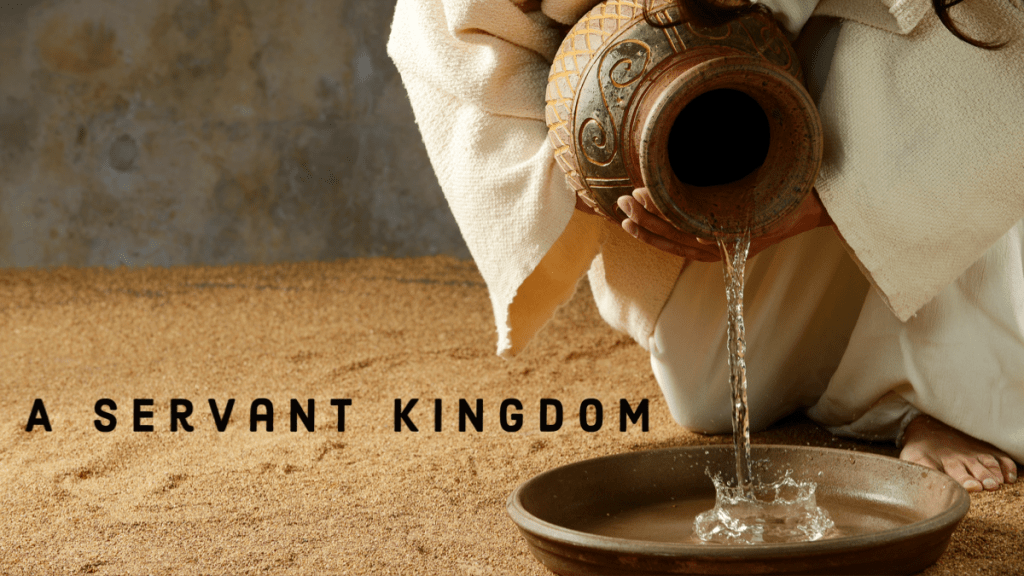
Israel, standing before Mt. Sinai will prepare for three days in order to receive the revelation. The people are tended to, not only by Moses and the eldership of Israel, but also a priesthood (Ex. 19:22). This is often a point of confusion, as when people read of Israel’s priesthood, they think of Aaron and his sons; however, they were not yet installed. So who are these “priests”?
The Hebrew word priest, or כֹּהֵן/cohen, simply means “one who serves” or a “servant.” The priesthood or servants referenced in Exodus 19 were people, not anointed into the Levitical office, but those presumably chosen by Moses or the elders to serve the people as they prepared to meet the Lord. These “types,” often overlooked, are important to our understanding of who we are in Messiah.
The apostle Peter directly quotes nearly half of Exodus 19:5-6 in 1 Peter 2:9 when he speaks of the Body of Messiah as a “chosen race, a royal priesthood, a holy people, a people for a possession…” Further, the apostle John writes in Revelation 1:6 that the Lord has made those in Messiah “a kingdom, priests to his God and Father … (ESV).” Some scholars suggest that it could be rendered: “a kingdom of priests to His God and Father…”
Still, what does this mean? Consider three points:
1. A kingdom of priests, or servants, is not concerned with their own fame, but with helping others, by their care, to thrive.
2. Glorify Him in all you do (1 Cor. 10:31).
3. A holy nation, literally a “set-apart people,” are called by God to be unafraid of being unique, or different, from the surrounding society, because of who He has made us to be, as Paul writes, “and if children, then heirs—heirs of God and fellow heirs with Christ, provided we suffer with him in order that we may also be glorified with him” (Ro. 8:17).
This is the calling of those covenanted to the Lord through the Blood of the Lamb, to: serve others, glorify Him in all they do, and be different. At its heart, the calling of God to those He has saved, is a calling to humility in service, even as a son or daughter of the Living God.
In Philippians 2:3 Paul writes, “Do nothing out of selfishness or conceit, but with humility consider others as more important than yourselves.” From what example? That of Christ, as Paul continues, “Who, though he was in the form of God, did not count equality with God a thing to be grasped, but emptied himself, by taking the form of a servant, being born in the likeness of men. And being found in human form, he humbled himself by becoming obedient to the point of death, even death on a cross” (Phil. 2:6-8).
CS Lewis wrote, “True humility is not thinking less of yourself; it is thinking of yourself less.” Paul, in referencing the humbled example of the Messiah, stresses that He could have advanced His importance and position as a means exemption from humbled, even humiliating service, but He did not. In this we find a stark difference with other world religions. Of all the religions of the world, the Messianic faith is the only one that makes its central event – the crucifixion of Messiah – the humiliation of its Lord and Savior. Why?
Hebrews 4:15 says that our High Priest is able to empathize with us, His people. He experienced the brokenness of humanity, and was moved in His heart to tears, as the shortest verse in the English Bible says, “Jesus wept.” He had compassion on the sick, on the downcast, even on the dead; and in that compassion He served them, healed them, and restored them. His compassion did not consider His own importance. He considered, just as Paul directs us, “others as more important than yourselves.”
What does this require us to do?
We must stop looking into the mirror of our-self, upon our beauty and importance, thereby laying aside our self-judgment, criticism, self-importance, or feelings of superiority. As Lewis encourages, “think of yourself less.” We are called in Messiah to be priests and a holy people, therefore we serve and seemingly become odd, different, unique in how we engage the human other in the eyes of the broader culture.
The priests of Exodus 19 served, unnamed, only recognized in a word from the Lord that they too must prepare themselves, even while serving others. It matters not if your name is forgotten here on earth, as it has already been written in heaven, therefore: “rejoice” (Lk. 10:20). In an era when everyone is a celebrity, the new fame is found in godly anonymity. That He knows you, is more than enough.
Be well. Shalom.
 the mountain mensch
Amen ! Love it. Never knew a priest meant to serve. May I be a better priest today. Thanks Justin
LikeLiked by 1 person