
I was the rebellious one. I was the murdering one. I was the guilty one. I was the released one. I was Barabbas.
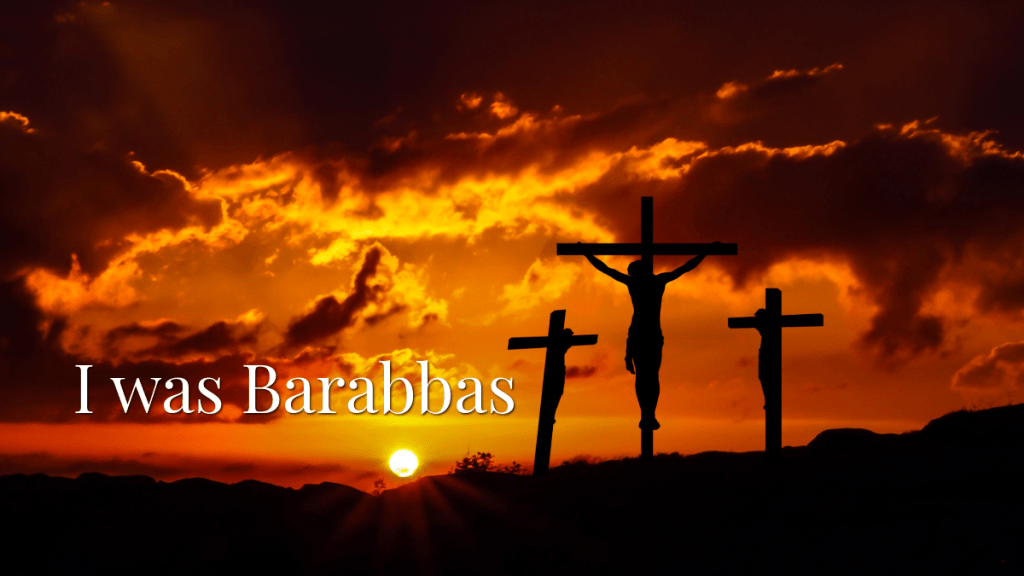
The Gospels present us with a haunting exchange: a guilty man walks free while the Innocent is led away to die. That guilty man was Barabbas—Βαραββᾶς (Barabbas), from the Aramaic בַּר אַבָּא, Bar-Abba, “son of the father.” He was a rebellious son of a father. I was that man, just as you were.
The crowd stood before Pontius Pilate, demanding a verdict. Pilate, the Roman governor, examined Messiah Jesus, and publicly declared Him innocent: “I find no fault in this man” (cf. Lk. 23:4, 14–15, 22). Three times the human judge rendered a verdict of acquittal. Yet the voices of the crowd prevailed. The guilty was released. The Righteous was condemned (1 Pet. 3:18).
Barabbas had committed insurrection and murder (Lk. 23:19). He embodied rebellion against both Rome and, more profoundly, against God’s order. And yet he was chosen. The people preferred a violent revolutionary over the Prince of Peace (Isa. 9:6). They preferred a false son of the father to the true Son of the Father.
This is more than history; it is revelation. Barabbas is every man in Adam, a son in the image of his father (Gen. 5:3). I was the rebellious one. I was the murderer, not by blade, but by hatred in my heart. I was the guilty one, standing justly condemned before divine justice. And yet I was the released one. How could this be?
Messiah Yeshua was substituted for me (2 Cor. 5:21) – another stood in my place.
The innocent for the guilty. The just for the unjust. The Son of the Father in truth stood in the place of a rebellious son. While the world chose my rebellion over His innocence, the heavenly Father would only receive me in the true Son. I could not approach God as Bar-Abba, a false son; I must be hidden in the beloved Son (Ro. 8:1).
What occurred before Pilate’s tribunal was not ultimately the triumph of mob rule, but the unfolding of divine purpose. The wicked human judge bowed to political pressure, but the heavenly Judge was fulfilling His own decree. As foretold in Isaiah 53, the Suffering Servant would be despised and rejected, numbered with transgressors, pierced for our transgressions, crushed for our iniquities. Barabbas walked free as the Servant was numbered with transgressors. More than that: sinners walk free because the Servant bore their guilt (Isa. 53:1-12).
On the Cross, Messiah did not just die for one criminal in Jerusalem; He died for the sins of the world (1 Jn. 2:2). The exchange of Barabbas is the gospel in miniature. It is the very picture of substitution embodied. One life for another. One verdict overturned by grace. The choice of Barabbas over Jesus is, for us, the picture of our own lives before salvation.
And yet the story does not end at Golgotha.
The same human heart that cried, “Crucify Him!” would soon cry out different words. By the gracious work of the Holy Spirit, hardened hearts and mouths are transformed (Ro. 10:9-10). Those who once mocked begin to marvel. Those who once scorned begin to sing. When the revelation of the true Son of God rushes in, the cry of rebellion becomes the cry of worship: “Praise Him.”
I was Barabbas. Guilty. Rebellious. Condemned.
But the Son of the Father stood in my place. And because He was handed over, I was released. Because of His substitutionary sacrifice I now cry out, “Abba! Father!” (Ro. 8:15). My sin forgiven. My life redeemed.
Maranatha. Shalom.
 the mountain mensch