
As we continue to examine Matthew’s Passion narrative, the evangelist narrows his focus as he approaches the final moments of Messiah’s life. Matthew 27:45–50 details a series of striking signs—supernatural darkness, a cry from the Psalms, the misunderstanding of the crowd, and the final breath of Yeshua/Jesus. These elements are not secondary details within the Passion story. Rather, Matthew presents them as signs that reveal the deeper meaning of Messiah’s death.
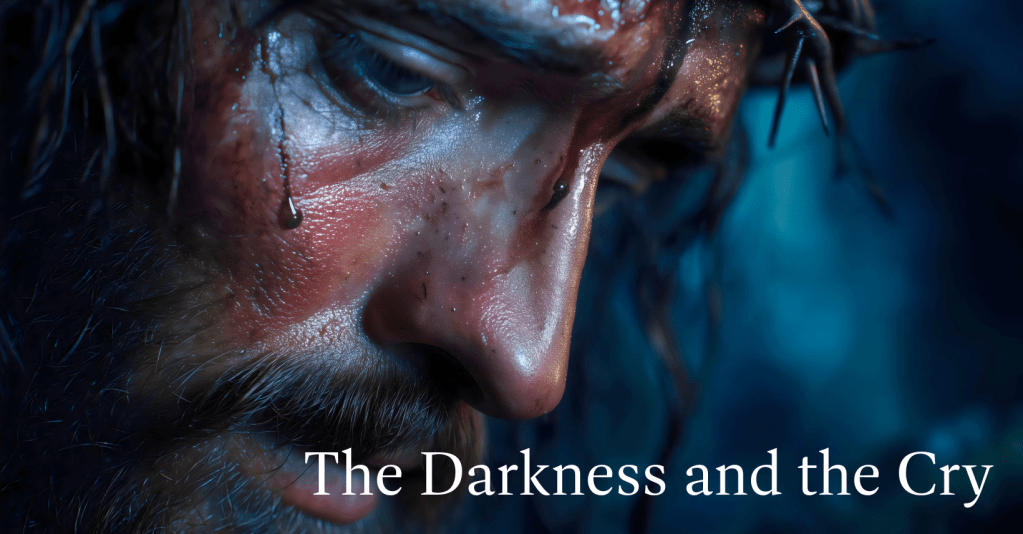
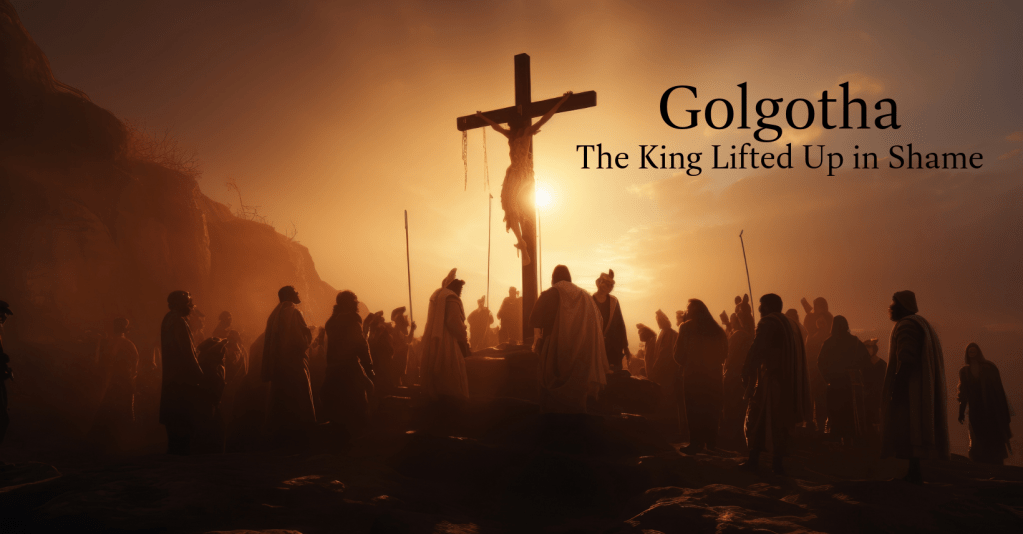
Matthew records: “Now from the sixth hour there was darkness over all the land until the ninth hour” (Matt. 27:45). From noon until three in the afternoon the land is covered in darkness. This three-hour shadow falls at the very hour when Israel prepares for the evening sacrifice in the Temple. The timing is deeply significant. At the very moment when the evening lamb is being offered in Jerusalem, the true Lamb of God hangs upon the cross.
The darkness itself carries strong biblical resonance. In the Exodus narrative, darkness was the ninth plague that fell upon Egypt (Ex. 10:21–23). That plague immediately preceded the slaying of the firstborn and the institution of the Passover sacrifice. Here in Matthew’s Gospel a similar pattern unfolds: darkness descends, and the firstborn Son—God’s own beloved Son—is about to be given (cf. Matt. 3:17). The darkness is not some atmospheric coincidence. It is deeply theological. Creation itself bears witness that something decisive is happening. The long-awaited hour of redemption had come.
And then, at about the ninth hour Jesus cries out: אֵלִי אֵלִי לְמָה שְׁבַקְתָּנִי, “Eli, Eli, lama sabachthani?” “My God, My God, why have You forsaken Me?” (Matt. 27:46). These words come directly from Psalm 22:1. In Jewish tradition, quoting the opening line of a psalm often calls to mind the entire psalm, and its meaning. Psalm 22 begins with anguish, but ends in vindication and worldwide proclamation of God’s salvation (Ps. 22:27-28).
The cry therefore reveals both the depth of Messiah’s suffering and the scriptural framework in which that suffering must be understood. Jesus is not abandoning faith; as He still addresses the Father as “My God.” Yet He enters fully into the experience of human abandonment and agony. The Messiah who heals the sick and raises the dead now shares in the deepest human cry—the sense of distance from God in the midst of suffering. Here, He drinks not from man’s cup, but from the cup of God’s wrath (Matt. 26:39, 42).
But some of the bystanders misinterpret His words: “This man is calling Elijah” (Matt. 27:47). The similarity between Eli (“my God”) and the name Eliyahu (Elijah) likely caused the confusion. But their reaction reveals more than a simple misunderstanding.
In Jewish expectation, Elijah was associated with the coming of the Messiah. The prophet Malachi had spoken of a messenger who would prepare the way of the Lord (Mal. 3:1), and specifically that Elijah would come before the great and terrible day of the Lord (Mal. 4:5–6). Isaiah had also foretold the voice crying in the wilderness preparing the way (Isa. 40:3). By the first century many expected Elijah to appear in connection with the Messiah’s arrival. The bystanders therefore speculate that Elijah might come to rescue Jesus, not knowing that Elijah and Moses had already met with Jesus on the Mount of Transfiguration (Matt. 17:1-8).
Interestingly, later Jewish tradition—especially by the medieval period—links Elijah closely with the Passover Seder as the herald of redemption. Yet here, at the crucifixion, we see Elijah already associated with the expectation of the deliverance the Messiah would bring. The crowd waits to see if the prophet will intervene.
One of the bystanders runs to fetch a sponge filled with sour wine and offers it to Jesus. Such wine, common among soldiers and laborers, may have been intended to dull the intensity of pain. Yet others say: “Wait, let us see whether Elijah will come to save Him” (Matt. 27:49). The moment is suspended in dramatic tension. Some seek to relieve His suffering, while others remain curious spectators, waiting to see if some miraculous intervention will occur. But none arrives.
Matthew concludes the scene simply and solemnly: “And Jesus cried out again with a loud voice and yielded up His spirit” (Matt. 27:50). The Messiah does not fade quietly into death. He cries out again—a final declaration of life and authority—and then voluntarily gives up His spirit.
The language suggests intentionality rather than defeat. The life of the Son is not taken from Him; it is given. As Jesus had earlier declared: “For this reason the Father loves me, because I lay down my life that I may take it up again. No one takes it from me, but I lay it down of my own accord. I have authority to lay it down, and I have authority to take it up again. This charge I have received from my Father” (Jn. 10:17–18).
At the hour of the evening sacrifice, under the shadow of supernatural darkness, the true Passover Lamb offers Himself, willingly.
Seen together, these events reveal how Matthew understands the death of Messiah. The darkness recalls the Exodus and signals both divine judgment and redemption. The cry from Psalm 22 reveals both suffering and the fulfillment of Scripture. The expectation of Elijah reflects the hope that Messiah’s coming would be preceded by the prophet who prepares the way. The final cry marks the deliberate offering of Messiah’s life.
The darkness at Golgotha therefore does not just signal tragedy; it signals that a new Exodus, a greater Exodus is unfolding. In the Passover story, the darkness over Egypt preceded the deliverance of Israel through the blood of the lamb. At Golgotha, darkness again precedes deliverance—but now the Lamb is the Messiah Himself, the “fullness of the Godhead bodily” (Col. 2:9). The silver half-shekel in Israel once declared, “Your life belongs to the Lord” (Ex. 30:11-16, Parashat Ki Tisa). At the cross another truth is revealed: the Lord has given His life for yours; the ransom price has been paid (1 Tim. 2:5-6). Jesus paid it all.
And so the darkness lifts, not because suffering has ended, but because redemption has been accomplished. As Peter exhorts us, “But you are a chosen race, a royal priesthood, a holy nation, a people for his own possession, that you may proclaim the excellencies of him who called you out of darkness into his marvelous light” (1 Pet. 2:9).
Maranatha. Shalom.
 the mountain mensch