
In Exodus 12:30, we read of the great outcry from the Egyptian homes:
וַיָּקָם פַּרְעֹה לַיְלָה הוּא וְכָל־עֲבָדָיו וְכָל־מִצְרַיִם וַתְּהִי צְעָקָה גְדֹלָה בְּמִצְרָיִם כִּי־אֵין בַּיִת אֲשֶׁר אֵין־שָׁם מֵת
“And Pharaoh rose up in the night, he and all his servants and all the Egyptians. And there was a great cry in Egypt, for there was not a house where someone was not dead.”
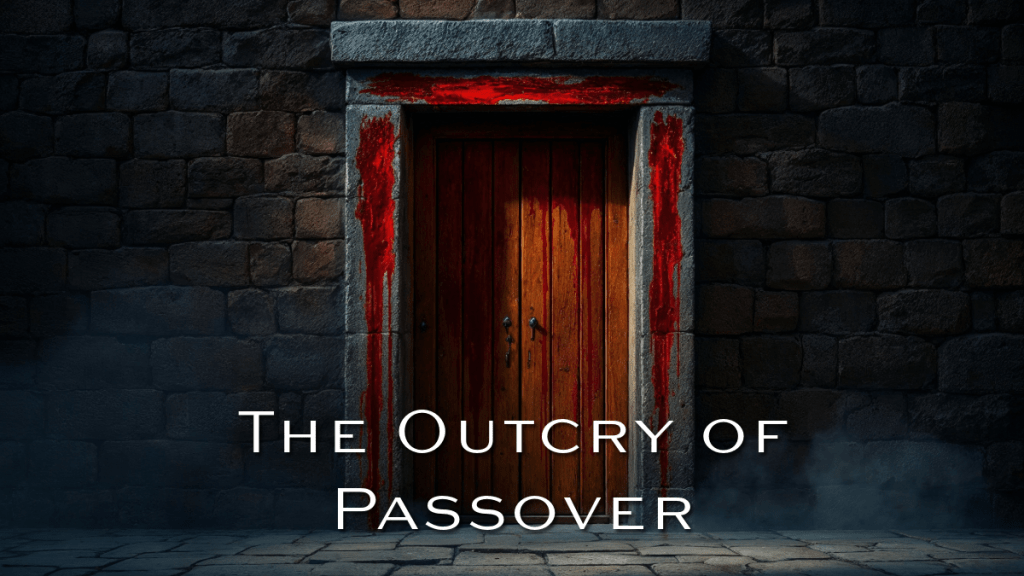
From the least to the greatest, every home experienced terrible loss. This was the tenth and final plague ultimately leading to the deliverance of Israel (Ex. 12:31-32). Even while the Israelites were gathered around their tables, ready to depart, as the צְעָקָה גְדֹלָה, “great distressful cry” echoed throughout the land, there must have been fear, anguish and expectation in the Hebrew homes.
For generations their lives were shaped by the pressure of slavery. Now, on this night of Passover, they would walk through the blood-marked doors on their way to freedom. A mixed multitude of Hebrew and foreign slaves (Ex. 12:38), all who heeded the word of the Lord (Ex. 12:1-20).
The weeks and months leading up to Passover seem to be a time of pressing for the people of God. Whether this is prophetic, environmental, or circumstantial the resulting exhaustion, and the cry it produces, is the same. This cry, however, is not like the Egyptians, one without hope; it is a cry from the depths of the soul, that while we endure pressure, we know the One who has delivered and will deliver us.
The Apostle Paul gives us great encouragement during seasons such as this, “We are afflicted in every way, but not crushed; perplexed, but not driven to despair; persecuted, but not forsaken; struck down, but not destroyed; always carrying in the body the death of Jesus, so that the life of Jesus also may be manifested in our bodies” (2 Cor. 4:8-10).
The language of affliction draws our minds back to Egyptian bondage. The grief of infanticide, the oppression of servitude, and the seeming hopelessness of deliverance from the hands of an oppressor. Paul notes that we can be afflicted, perplexed, persecuted and struck down. Yet, in each instance he offers rebuttal: we are not crushed by affliction, we are not driven to despair, we are not forsaken, and we are not destroyed. We bear about in these “jars of clay” (2 Cor. 4:7) the death of Christ in order that the life of Christ would be manifest in us. While we are yet diminishing, day by day, He is ever increasing, even in our seasons of pressing.
Personally, it has been a season of tremendous pressing for a multitude of reasons. But in the exhaustion and despair the hope remains Messiah. My mind wanders back to Paul’s inspired words, perhaps derived from his own seasons of trial, and I lean into those promises, as he continues in 2 Corinthians 4:16-18, “So we do not lose heart. Though our outer self is wasting away, our inner self is being renewed day by day. For this light momentary affliction is preparing for us an eternal weight of glory beyond all comparison, as we look not to the things that are seen but to the things that are unseen. For the things that are seen are transient, but the things that are unseen are eternal.”
The vigor of natural man in body and mind gives way to an unavoidable wasting away, apart from the sustaining grace of Christ. By His grace, the wasting of the natural man reveals the renewed man, once overcome now overcoming in Him. This is the challenge for every believer: to look beyond inner distress and fix our gaze upon the hope revealed in His resurrection – the greater Exodus to which Passover has always pointed.
The night of Passover teaches us that not all cries are the same. Egypt cried out in judgment, but Israel stood in trembling expectation – covered by the blood, waiting for redemption. The same night that brought death to one people brought deliverance to another.
So it is with the faithful today. There is still an outcry in the earth, and there is often an outcry within us. Yet for those who are in Messiah, our cry is not one of despair, but of expectation. We stand, as it were, behind blood-marked doors, aware of the darkness, aware of the weight of affliction, yet confident that redemption is at hand.
The pressing is real, but it is not without purpose (Ro. 8:28-29). The affliction is present, but it is not without His promise (2 Cor. 1:20-22). For just as Israel stepped out of bondage into freedom, so too we are being led – through weakness, through trial, through daily dying – into the life of the risen Christ.
And when the night has done its work, and the cry has given way to silence, the call of redemption will come again. Those who trust in Him will rise, take what has been prepared, and depart in haste – not in fear, but in freedom.
Maranatha. Shalom.


 the mountain mensch