Servant-hearted Leadership

In Parshat Devarim (Deut. 1:1–3:22), Moses begins his final address to Israel. It’s not just a retelling of events, he shares words shaped by concern, memory, and the ache of leadership. He recounts the wilderness journey, the rebellions, and the burden of judgment, not with bitterness; but with the language of fatherly and pastoral care.

“How can I bear by myself the weight and burden of you and your strife?” (Deut. 1:12).

This verse is not a complaint, it’s the cry of a leader who has carried his people in prayer, in grief, and in hope. Moses doesn’t distance himself from Israel’s failures; he brings them close, bearing them as a parent would a wayward child. In the wilderness, his intercessions softened divine anger. His rebukes were tempered with tears; and in his farewell, every word is wrapped in fatherly love.

Servant-hearted leadership (Matt. 20:26-27), as Moses examples, is often intercession. Leadership is not just administration, it’s advocating for the people you lead. Moses stood between the people and God, pleading on their behalf in moments of terrible failure. The heart of a true servant-leader bleeds with the struggles of the flock.

Moses does not gloss over the failures of the people, he recounts them to point to the Lord’s faithfulness and their growth. He is not shaming them, rather Moses uses memory as a reminder of the Lord’s mercy. 

Moses knew their complaints and rebellions, yet he still called them beloved (Deut. 7:6-8). The burdens in the wilderness were not easy, but those burdens were holy. A servant-leader loves not because it’s painless, but because it is a witness to how He has loved us (Ro. 5:8; cf. 1 Jn. 4:19). Servant-leadership is blessing packaged within the burden of life.  

As you lead … yes, as you lead … in ministry, family, or community, remember: love does not erase hardship, it sanctifies it. May we look to the teaching example of Moses and lead with: memory, mercy, and the unshakable commitment to bear the burdens of His people (Gal. 6:2). 

And even more so, may we be shaped in leadership by the love of Messiah Yeshua/Jesus, who said, “I am the good shepherd. The good shepherd lays down his life for the sheep” (Jn. 10:11). He loved His own to the end (Jn. 13:1), and gave Himself willingly, offering not just leadership, but redemption, renewal and reconciliation. He led and made the way through the impossible for us, and He has called us into that way. 

May our servant-leadership be with faithfulness, not selfish ambition, leading by our identity in Him, not from position. Messiah stooped down to reach us. He carries our burdens. He serves and protects the flock. He then called, equipped, and released servant-leaders empowered by the Holy Spirit to make disciples. 

Leading like Christ is not a management strategy, it is redemptive work done to the glory of the Father (1 Cor. 10:31). His yoke is easy, not because the task is small, but because His heart is pure. As we labor unto Him, our servant-hearted leadership is expressed by intercession, burden-bearing, and equipping others for the harvest fields. May we endeavor to serve in faithfulness, and a purity of heart that desires “all people to be saved and to come to the knowledge of the truth” (1 Tim. 2:4); but to do so, we must love those placed in our care. 

Maranatha. Shalom. 

The Mystery of Purity and the Rock of Our Redemption 

In Parsha Chukat/statute (Num. 19:1–22:1), we’re drawn into the enigma of the parah adumah, the red heifer, a command beyond logic, a “chok,” that purifies those defiled by death while rendering the purifier unclean (Numb. 19:1–10). This paradox reveals a profound spiritual principle: that cleansing and transformation often emerge through sacrificial loss.

Rabbi Menachem Mendel Schneerson, the Lubavitcher Rebbe, taught that the red heifer exemplifies the soul’s capacity to serve God beyond understanding. While some commandments align with human reason, chukim (חֻקִּים/statutes) invite us into supra-rational devotion, reflecting a relationship rooted not in comprehension, but in covenantal surrender.

This idea aligns with Paul’s exhortation in Romans 12:1, calling disciples to present themselves as “living sacrifices.” We are offered up in Messiah Yeshua/Jesus. In Him the mystery of the red heifer as both offering and purifier comes into focus. Of Messiah, Paul writes, “For our sake He made Him to be sin who knew no sin, so that in Him we might become the righteousness of God.” (2 Cor. 5:21). Like the red heifer, Yeshua bore the uncleanness of sin and death outside the camp on Golgotha (Heb. 13:11–12) to cleanse us by His own blood (1 Jn. 1:7; Eph. 1:7). 

Later in this portion, Moses is instructed to speak to the rock to supply water (Numb. 20:8), but instead he strikes it, disrupting a divine pattern. Paul reveals that the rock was Messiah (1 Cor. 10:4). Striking the rock in Exodus 17:6 prefigures the crucifixion. Numbers 20:8 was to mark a new mode of relationship to the Rock: provision through faith, reverence and obedience, not repeated suffering as a misguided sign of devotion. For Messiah was “offered once for all” (Heb. 10:10), and now we share in His provision by His promise of His presence.

The bronze serpent (Numb. 21:8–9) adds another layer. Yeshua applying the imagery to Himself said, “And as Moses lifted up the serpent in the wilderness, so must the Son of Man be lifted up, that whoever believes in him may have eternal life.” (John 3:14–15). Judgment becomes healing when seen through the lens of faith (Ro. 5:6-11). 

Chukat calls us beyond the reasonable and rational into redemption. Its commandments are not arbitrary, they are invitations. The red heifer, the rock, and the serpent all converge in Messiah: our purifier, our provider, and our healer. Rabbi Schneerson encouraged us to embrace the irrational commandments not with skepticism, but with faith and surrender. Yeshua shows us that the greatest mysteries of Torah are fulfilled not in the mind alone, but through lives laid down in love (Jn. 10:11; 15:13).

As leaders, shepherds, and faithful disciples we are called not only to understand these “mysteries” but to live them: to bear burdens, to speak life, and to lift up Messiah so others may live.

Maranatha. Shalom. 

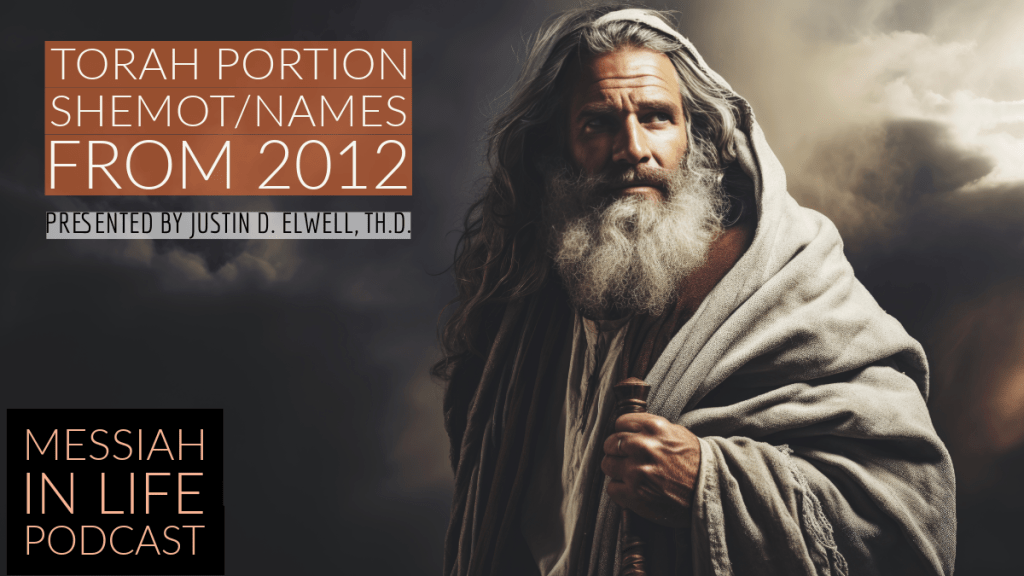
Classic Message, 2012, New Podcast Available!

Tap pic for link!

Shalom friends, as I have been under the weather this week I decided to look back into the archive and find a message to share. This message on the Torah portion of Shemot/Names is from 2012. In this message we consider the calling, refusal, but ultimately the preparation of Moses for his calling. How does this translate for today? How do we, or how have we disbelieved our calling in Messiah? Finally, how do we walk in this new life that He has graced us with? *Not the best audio, sorry.