The incarnation and birth of Messiah Yeshua/Jesus often gets caught up in commercialization or theological debate, rather than drawing us into the prophetic promise of His birth. In this episode, we unpack prophetic writing, and textual translation and witnesses to bring forth the hope expressed simply: “for unto us a Child is born; for unto us a Son is given.” What do we make of this vulnerable Child born in a manger? Give a listen.
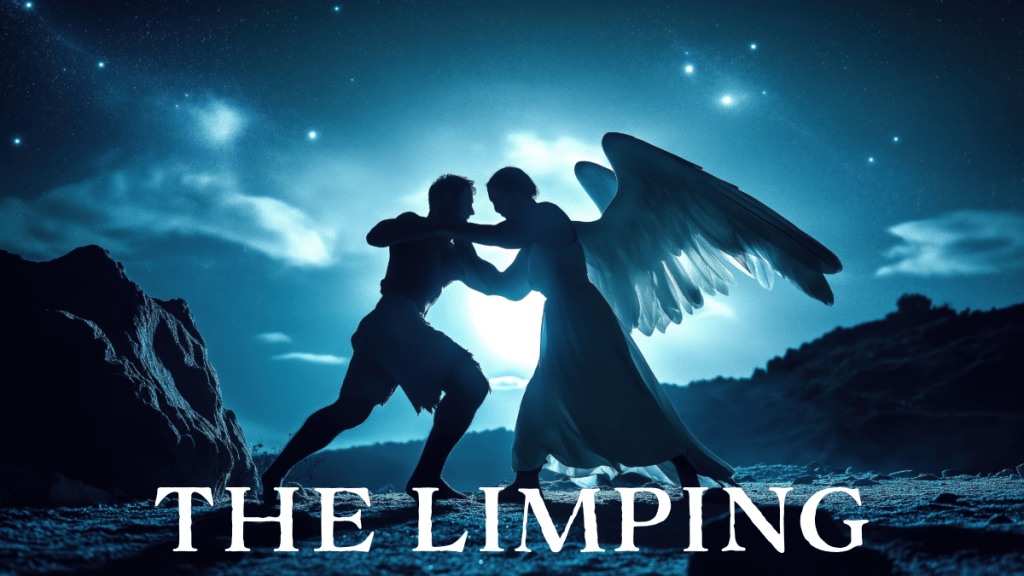
Genesis 32:22-33 records a rather unusual event in the life of Jacob. While in exile, Jacob had grown into a great house filled with wives and children. However, after Jacob hears the new of Esau’s approaching, we read: וַיִּוָּתֵר יַעֲקֹב, לְבַדּוֹ, “And Jacob was left alone.”
While Jacob was with Laban, the blessing of choosiness began to take shape in his life, even though it manifest through the mess that was his family life (Ro. 8:28). Yet, he now stands alone. Why? וַיִּשְׁלַח יַעֲקֹב מַלְאָכִים לְפָנָיו, אֶל-עֵשָׂו אָחִיו, “And Jacob sent messengers/angels from before him to his brother Esau,” (Gen. 32:4) and what did these messengers report? Esau is approaching with 400 men, an army. Jacob becomes afraid and distressed (Gen. 32:8) and begins to divide his house in order that some might survive the attack. Then he prays to the Lord.
Jacob’s error: he panics, then prays.
It’s not just Jacob’s error, it’s an error many of us are guilty of. Jacob prays, but he does not wait for an answer. He executes his plan, sending his family forward.
וַיִּוָּתֵר יַעֲקֹב, לְבַדּוֹ; וַיֵּאָבֵק אִישׁ עִמּוֹ, עַד עֲלוֹת הַשָּׁחַר, “And Jacob was alone, and he struggled with a man, to the rising of the dawn.” This is one of the most unusual moments recorded in the Torah, and perhaps the most profound. Jacob wrestles/struggles, he has a “dust up,” the meaning of “wrestle” here, with an אִישׁ, a man. Where did this man come from when the Torah clearly states that Jacob was alone?
When we meditate on this text, we often take note of Jacob’s strength as he was able to wrestle with the man until the dawn. Yet, the “man” was holding back. Why?
וַיִּגַּע, בְּכַף-יְרֵכוֹ; וַתֵּקַע כַּף-יֶרֶךְ יַעֲקֹב, “And he laid his hand in the power of his thigh, and dislocated the loins/thigh/hip of Jacob.” The man laid his hand on Jacob’s inner thigh, where the power of the loins, muscles and body’s foundation meet, and reset Jacob. He limped Jacob with only a touch. צָלַע, to limp, literally, He curved Jacob with a touch, He changed not just how Jacob walked, but how Jacob appeared with a touch. He demonstrated the power of His touch, as He touched the same place where Eliezer placed his hand when he promised Abraham that he would find Isaac a bride. In the pain, Jacob recognizes the power of this man to bless. He has wrestled everyone for blessing – Esau, Isaac, Laban, his wives – and he never received what he longed for – the blessing – and now he wouldn’t let go until he received it.
The Man has Jacob acknowledge who he has been by asking his name: Ya’akov, the supplanter. He then changes Jacob’s name to Israel. Why? With Abraham, the Lord added the Hebrew letter “ה” to breathe new life into him, from Abram to Abraham – for him to become a father. With Jacob, the Lord completely changed his name from supplanter (Ya’kov) to Israel – fighter for God. The Lord’s strength was exchanged for Jacob’s fear, anxiety, and weak character. Why? “My grace is sufficient for thee. My strength is made perfect in weakness.”
Blessings are always spoken; but Moses does not record the blessing spoken to Jacob/Israel. Why?
Just like Leah felt unloved, while Jacob was loved by Rebecca, he felt unloved by Isaac (Gen. 25:28) his father. The man does not give His name. Why? The blessing revealed His name, and who He was, and it also revealed to Jacob/Israel that he was loved by his Father in Heaven – that was the blessing, as He had already promised to bless him in Genesis 28:13-15, and He did.
Jacob acknowledges that he has seen “God face to face (פָּנִים אֶל-פָּנִים),” and he calls that place פְּנִיאֵל, “face of God.” Moses then calls the name of that place פְּנוּאֵל, “turn to God,” if you want to see God “face to face” you must “turn to Him.”
Who is this Man? In Genesis 28, in Jacob’s dream, the Lord was above standing upon the ladder in heaven. He promised to bless Jacob and be with him. In Genesis 32, the “Man” who stood above, was now below with him, just as in John 1:51 when Yeshua was with Nathaniel. Jacob then wrested, got into a dust up, with the Man for the blessing – the dust was flying/floating – the same dust that man was formed with. From vision/dream to physical reality.
The wrestling is the reformation of Jacob, by the original Former – Yeshua/Jesus – Whose powerful hands formed Adam. The Hebrew word אִישׁ, is the clue. Not only does it mean “man,” but it also means “husband” and “steward.” This was the True Husband that Leah saw prophetically, and it was the Steward that visited Adam and Eve in the Garden in the Ruach HaYom (the spirit of the day). What was the Spirit of Jacob’s Day when Yeshua visited Jacob? Darkness and despair. Which is why Yeshua had to depart before the sun came up – Jacob needed to know the Lord was with him in the darkness, not just the blessing or the day.
The Lord had promised to be with him – Emmanuel – and rather than turning to Him, Jacob wrestled with Him. How often do we struggle with the God who is with us when fear and anxiety find us?
The Man had the power: to appear out of nowhere; to change Jacob with a touch; to bless; and to change his walk, nature, identity, and appearance.
What the Lord did to Jacob, He does to all of us. The Lord gives us a “laming” to remind us of our weakness before Him. Each of us have our own laming, a permanent reminder of His revelation to us, and our dependence on His grace. With Paul it was a “thorn in the flesh,” “a messenger of satan,” that kept him from exalting himself. And even though he prayed for it to be removed, the Lord said, “My grace is sufficient for you, for My strength is perfected in weakness.”
Paul was not a weak man, and neither was Jacob, but they were made weak by His Presence, in order that they be strengthen by His Presence. It was not their weakness that His strength was perfected in, but the apparent weakness of the Cross, where the strength of God was manifest most profoundly.
The Cross was the place where the terror that overcome Jacob, the terror that grips all humans, was defeated, death. The Cross is the place where every human will wrestle with the Bridegroom, the Steward, the Shepherd, the King. It is where every descendant of Jacob will wrestle with the אִישׁ/the Man that Jacob wrestled with, the place where we are all “limped” and we all begin to walk in His grace and strength that is sufficient for life. It’s only when we limp that we can truly “walk with the Lord.
There are times in the life of a flock when they stay relatively still, not moving very far if at all. How do we understand these seasons in the life of faith? What is going on when it seems that we are not receiving any direction from the Lord? Give a listen!


 the mountain mensch