
The parable of the Urgent Invitation. With each parable, Messiah is urging us to a response. What is the urgent response needed here? And what does it speak to our heavily scheduled life today?

The parable of the Urgent Invitation. With each parable, Messiah is urging us to a response. What is the urgent response needed here? And what does it speak to our heavily scheduled life today?
וַיְדַבֵּר יְהוָה, אֶל-מֹשֶׁה לֵּאמֹר
שְׁלַח-לְךָ אֲנָשִׁים, וְיָתֻרוּ אֶת-אֶרֶץ כְּנַעַן, אֲשֶׁר-אֲנִי נֹתֵן, לִבְנֵי יִשְׂרָאֵל: אִישׁ אֶחָד אִישׁ אֶחָד לְמַטֵּה אֲבֹתָיו, תִּשְׁלָחוּ–כֹּל, נָשִׂיא בָהֶם
“The Lord spoke to Moses, saying, “Send men to spy out the land of Canaan, which I am giving to the people of Israel. From each tribe of their fathers you shall send a man, every one a chief among them” (Num. 13:1-2).

I am my own worst critic. Not unusual. I do, however, remember when the view of myself changed dramatically. I was publicly humiliated by a person in authority, with language that echoed in my heart and mind for years. I maintained my stoic demeanor outwardly, but inwardly I was crushed. I had been out late pursuing my dream of music, and fell asleep in first period study hall. A sin of the highest order, apparently.
For many years after, the inner landscape of my life looked dismal. Fears became insurmountable mountains. Dreams and ambitions a wasteland; and “we were in our own sight as grasshoppers, and so we were in their sight” (Num. 13:33). Not only did I see the limitations of my life, everyone else, in my estimation, did as well. The power of words.
The Lord directs Moses to send men of authority into the Promised Land to see what manner of men dwelled there, how the land was, and what the settlements were like (Num. 13:17-20). The men, 40 days later, bring a report and fruit of the land as evidence (Num. 13:25-27). They started with words affirming the goodness of the land and God’s Promise, but ended with discouraging words doubting Israel’s ability to overcome the inhabitants and to settle. The bad news was more immediate than the good news.
The response was immediate. The words of 10 of the 12 spies were persuasive enough for the exodus generation to doubt, and in doubt fall into mournful rebellion. The landscape of God’s promise became a dismal horizon.
The spies went beyond their purpose. Rather than seeing the land with hope, they examined it critically. Failing to remember that God would bless them, and the Promised Land, they saw only impossibility before them. Ten voices setting doubt over promise, shattered the lens through which they received God’s Word. As impassioned as Joshua and Caleb were in their rebuttal, the deep impact of fear, criticism and doubt triumphed over their words of faith.
The inspectors saw only the difficulty, and as a result, a generation was subject to a forty year day trip. Again, in their assessment they left God, His Promise and His Presence out. God was excluded.
In our own lives, we need Caleb’s and Joshua’s around us. People who will contend with those voices speaking in doubt to us, forgetting that it is God Who goes before us. Yes, there is difficulty ahead, but God … it is for Him to sort it and settle it.
I am thankful that in my life, even as painful as those words spoken 30 years ago were, that God had the last word. I often see only the dismal horizon in myself; but God has provided, not just two, but too numerous to recount, voices of affirmation of His Promise. Yes, the horizon I see is hard, it’s filled with rocks, roots, hazards of all sorts, but God. Not only do Caleb’s and Joshua’s surround me, but the Holy Spirit ministers the life of Messiah to me. Hallelujah!
What did Messiah say? “I have said these things to you, that in me you may have peace. In the world you will have tribulation. But take heart; I have overcome the world” (Jn. 16:33). His Promises the Holy Spirit ministers. The Word that holds all life together.
Dear reader, you are far more than your worst day, even your worst moment, and the worst thing you have ever done, because of Him. You are a fertile field of God’s Promise.
Be well. Shalom.
Numbers 8:1-2 reads:
וַיְדַבֵּר יְהוָה, אֶל-מֹשֶׁה לֵּאמֹר
דַּבֵּר, אֶל-אַהֲרֹן, וְאָמַרְתָּ, אֵלָיו: בְּהַעֲלֹתְךָ, אֶת-הַנֵּרֹת
אֶל-מוּל פְּנֵי הַמְּנוֹרָה, יָאִירוּ שִׁבְעַת הַנֵּרוֹת
“And the Lord spoke to Moses, saying, ‘Speak to Aaron, and say to him, when you light the lamps, before the face of the Menorah, the seven will give their light.’”
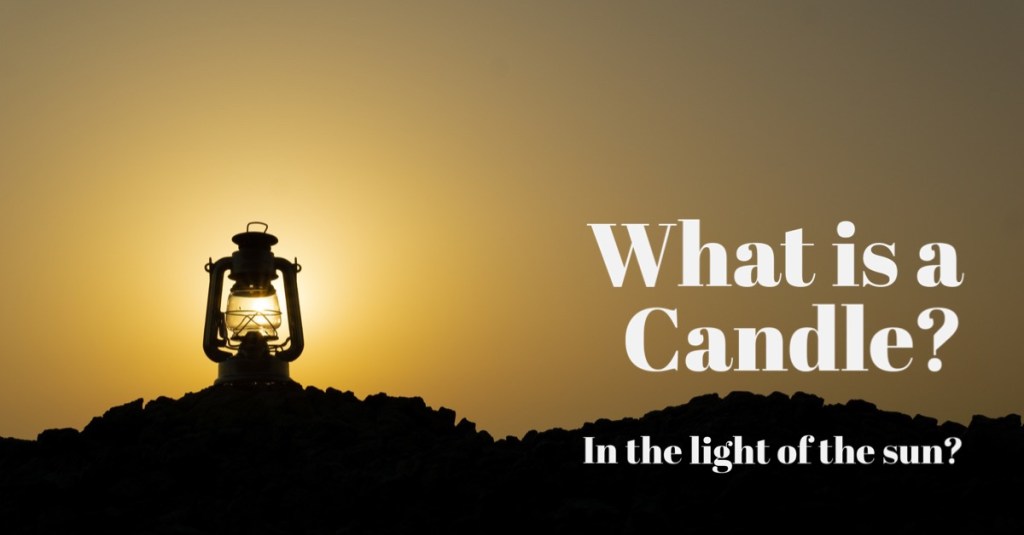
Numbers 8 immediately follows the accounting of the gifts of the tribes of Israel, presented by the princes of the tribes, before the Lord. The Midrash asks why the command for lighting the Menorah follows the gifts of the tribes, rather than being included with the command for the Menorah itself. The rabbis explain, that while collectively the princes presented riches for the Tabernacle, before the Lord, Aaron and his sons would offer light. While the riches will fade, the light is everlasting.
At times it is difficult to see or recognize the importance of what we have been purposed to do for His Kingdom. Like Aaron, we may watch others participate in different aspects of His Kingdom and wonder why we are not likewise called to do as they are doing. But the Lord is revealing to Aaron and his descendants that what they are called to do the princes of the tribes cannot do: they cannot enter and minister in the Holy Place, or the Holy of Holies.
In fact, the ministry of the Holy Place, to include the kindling of the Menorah, was the first of all ministries in the Tabernacle, and later, the Temple. Without this ministry nothing else happened: sacrifices were not given, reconciliation and thanksgiving did not happen. Without the kindling, the Tabernacle was just a tent.
The story is told that when Moses assembled the Tabernacle and entered, the Ark having been set in place, the light of God was so overpowering that he asked the Lord, “why place the Menorah at all?” The Lord then said to Moses, “Place a curtain between the Holy Place and the Holy of Holies, and our light will meet there.”
What is the light of a candle in the light of the sun? In the radiant presence of the Glory of God, what is our light? The Kingdom of Heaven.
Messiah Yeshua said, “I am the light of the world. The one who follows Me will no longer walk in darkness, but will have the light of life” (Jn. 8:12).
As Peter amplifies so beautifully, “But you are a chosen people, a royal priesthood, a holy nation, a people for God’s own possession, so that you may proclaim the praises of the One who called you out of darkness into His marvelous light” (I Pet. 2:9). Chosen. Priesthood. Holy. God’s possession. Proclaimers in light.
Messiah is the light of the Holy of Holies – the fullness of the Godhead bodily. We are as the light of the Menorah, as Messiah said, “You are the light of the world. A city set on a hill cannot be hidden. Neither do people light a lamp and put it under a basket. Instead, they put it on a lampstand so it gives light to all in the house. In the same way, let your light shine before all men so they may see your good works and glorify your Father in heaven” (Matt. 5:14-16).
Again, what is the light of a candle in the light of the sun? We can assume that it is nothing, as it is overtaken by the great light, but in the Kingdom of God, it is commanded.
The divine presence in the Tabernacle was an overpowering light, there was no need for the Menorah – except the Lord commanded it to be. One candle may not seem like much, but when the light is commanded by God, and the deed is done before men, when they glorify Him, the deed has the power of the Son.
We live in an age where it seems that darkness is more powerful than light, but the power of heaven overpowers all.
Our light may seem like nothing in the glow of heaven, but if we are faithful to light and shine, He is faithful to enter in, and dine with us (Rev. 3:20). Let us not, “lose heart in doing good, for at the proper time we will reap a harvest if we do not give up” (Gal. 6:9).
Someone, or something may seem to shine greater, but He has still commanded you to shine for Him regardless.
Be well. Shabbat Shalom.
 the mountain mensch