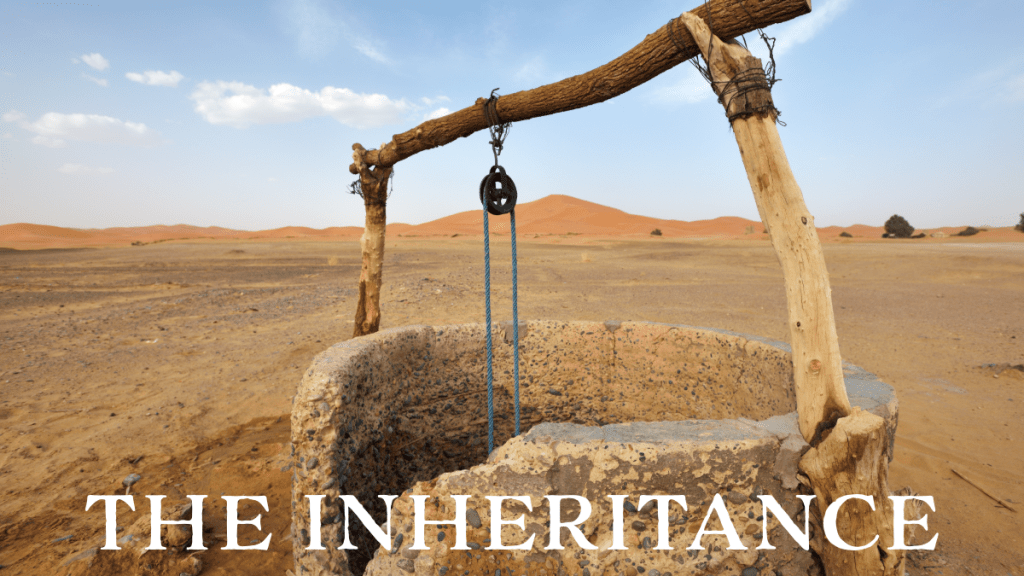
The Place He Chooses

So much of the Torah portion called כִּי־תֵצֵא/Ki Tetze, “when you go out,” offers instruction to combat cruelty to both humans and animals. Most of these commands are a radical departure from the accepted practices of the surrounding people groups. From returning lost sheep, to protecting the bird’s nest, to not muzzling an ox treading out grain, the Lord causes us to consider carefully the least so that we do not disregard the human other.

Yet, the most radical command in this week’s portion, perhaps in the entire Torah itself, could be easily overlooked. In Deuteronomy 23:15-16 Moses writes, “You shall not give up to his master a slavewho has escaped from his master to you. He shall dwell with you, in your midst, in the place that he shall choose within one of your towns, wherever it suits him. You shall not wrong him.”

There is a phrase included in these verses that should be familiar: “in the place that he shall choose.” This phrase appears some eighteen times in the Torah, seventeen of these instances refer to the place where the Lord would choose to make His name dwell (Deut. 12:11 as an example), the other references the runaway slave. Furthermore, Moses says that the runaway slave shall “dwell with you, in your midst,” just as the Lord says He will dwell in the midst of His people.

There are many instances in the Torah when the Lord desires to draw a parallel between two seemingly dissimilar subjects to emphasize a greater ethical and theological point. The Lord, the King of His people, will choose where He will dwell. The sovereign Lord then gives the runaway slave the same right, a right the native born were not given. The Lord will dwell in the midst of His people. The runaway will not be in a type of exile in Israel, he will be part of the community. The similarity is impossible to miss, adding to the theological significance and power of this command.

It was the practice among civilizations in the ancient near east to return runaway slaves. Israel was the exception. Why? Israel was a nation of freed slaves. The Promised Land would be a sanctuary land, just as the City of Refuge would provide sanctuary for those suspected of manslaughter in the land. What this illustrates profoundly is the change of status of the one seeking refuge. The runaway slave may indeed be a fugitive from their owner, but in Israel they received a new status: free man. This freed status was secured and protected by the Lord.  

Yet, the Lord knows the hearts of men. Not only shall you “not give up to his master a slavewho has escaped from his master to you,” but you shall “not wrong him,” meaning to oppress him by enslaving him yourself. He is now your neighbor, even if he is a stranger, and you shall love him as yourself because you were strangers in Egypt (Lev. 19:18, 34). Israel was not to be a society where the strong exploited the weak. The runaway slave was made in the image and likeness of the Living God; therefore he would be shown the same dignity, respect and love as the native born.

How great is the immeasurable grace of the Lord?

In Psalm 91:4 we read, “He will cover you with his pinions, and under his wings you will find refuge; his faithfulness is a shield and buckler.” Those who seek refuge in the Lord, even the runaway, find covering and protection. Is this deserved? No, it is the grace of God working in our lives. Regardless of our situation in life, when we seek Him we will find home.

Messiah Yeshua/Jesus invites us: “Come to me, all you who are weary and burdened, and I will give you rest. Take my yoke upon you and learn from me, for I am gentle and humble in heart, and you will find rest for your souls. For my yoke is easy and my burden is light” (Matt. 11:28-30).

Paul, speaking to the liberated in Christ wrote: “Consequently, you are no longer foreigners and strangers, but fellow citizens with God’s people and also members of his household, built on the foundation of the apostles and prophets, with Christ Jesus himself as the chief cornerstone. In him the whole building is joined together and rises to become a holy temple in the Lord.And in him you too are being built together to become a dwelling in which God lives by his Spirit” (Eph. 2:19-22).

In Messiah we become the place where He makes His name dwell (Rev. 22:4). We are provided a place prepared for us in His Kingdom by the risen Lord Himself (Jn. 14:1-4). Whatever our status or condition in life was, when we flee to Messiah, our status changes, or condition changes, and the old master, that serpent of old, has no right of ownership. The slave master called sin caused us to stray, but in Christ, Peter assures us: “For you were straying like sheep, but have now returned to the Shepherd and Overseer of your souls” (1 Pet. 2:25).

Maranatha. Shalom.

Don’t Lose Heart

In 2 Corinthians 4:7-10, the apostle Paul writes, “But we have this treasure in jars of clay, to show that the surpassing power belongs to God and not to us.  We are afflicted in every way, but not crushed; perplexed, but not driven to despair; persecuted, but not forsaken; struck down, but not destroyed; always carrying in the body the death of Jesus, so that the life of Jesus may also be manifested in our bodies.”

The apostle encourages us as to this transformation by pressing, further exhorting us, “So we do not lose heart. Though our outer self is wasting away, our inner self is being renewed day by day” (2 Cor. 4:16). How are we conformed to the image of Messiah (Ro. 8:28-29)? Pressed: crowded, pressed as grapes, tribulated; but not crushed, not caught in the narrow place (Egypt). Perplexed: no way out, to be at a loss, but not in despair, not utterly lost. Persecuted: put to flight, pursued, but not forsaken or abandoned. Struck down: thrown to the ground, but not destroyed, perishing, ruined.

Here is Paul’s “this but not this”: we are pressed, perplexed, persecuted, stuck down, yet we are not lodged in a narrow place, utterly lost, abandoned, or perishing in this condition. Rather, we are “carrying around” (2 Cor. 4:10) the death of Messiah, in our bodies (the witness of His death) in order that the witness of His life be also in us. Paul urges us to trust in the Father, Who raised Messiah from the dead, in order that “the grace that is spreading through more and more people may cause thanksgiving to overflow – to the glory of God” (2 Cor. 4:15).

Still, this pressing, perplexing, persecuting, cast down position may at times cause us to doubt, to even wonder in doubt, whether we have been cut off from Messiah. Paul writes to those being renewed in Messiah (Ro. 8:30), “Who shall separate us from the love of Messiah? Shall tribulation, or distress, or persecution, or famine, or nakedness, or danger, or sword? … But in all these things we are more than conquerors through Him who loved us. For I am convinced that neither death nor life, nor angels nor principalities, nor things present nor things to come, nor powers, nor height nor depth, nor any other created thing will be able to separate us form the love of God that is in Messiah Yeshua our Lord” (Ro. 8:35, 37-39).

Twice in 2 Corinthians 4, Paul writes, “We do not lose heart,” Why? “We have received mercy.” The mercy of Messiah. The stamp of God’s righteousness (justification), and the seal of the Holy Spirit on us (sanctification) sets everything of this world against us. The Good News of salvation by grace through faith in Messiah Yeshua (Eph. 2:8), brings the pressing of sins gravity into our lives; even as the hand of God reforms this clay.

James exhorts us to “count it all joy, my brethren, when you encounter various trials, knowing that the testing of your faith produces endurance” (Jas. 1:2-3). Peter writes, “By faith, you are being protected by God’s power for a salvation ready to be revealed in the last time. You rejoice in this greatly, even though now for a little while, if necessary, you have been distressed by various trials. These trials are so that the true metal of your faith (far more valuable than gold, which perishes though refined by fire) may come to light in praise and glory and honor at the revelation of Messiah Yeshua” (1 Pet. 1:5-7).

Both James and Peter speak about the joy of experiencing “various trial” that produce endurance, revealing the substance of our faith. Various trials, in the Greek is ποικίλος/poikilos/various, meaning “many colored trials.” How do we understand this? In 1 Peter 4:10, he writes, “As each one has received a gift, use it to serve one another, as good stewards of the many-sided grace of God.”

Those who have received a “charis,” a gift, are to use it to the benefit and blessing of the other, because you have received of the “many colored grace” of God. Peter writes of the “many colored trials” (1 Pet. 1:6), then he writes of the “many colored grace” of God. As Paul warned us, we will be “crowded” by tribulation appearing in many ways, coming from all sides; but as Peter wrote equal to, and greater than the broad spectrum of trials, fiery though they be, God’s grace is greater, and is also “coming from all sides.” Why do we not lose heart? His grace.

Grace begins the faith life, as we are saved by grace through faith. Grace is with us on the journey. Grace is with us as we enter eternity. Where is His grace working in your life today? Will you take hold of His grace today? His grace is where He is, and He is right here as our Emmanuel, Yeshua/Jesus.

Faith, “for we walk by faith and not by sight” as we journey to the unseen things, is the disciplined action that hangs the body on what the mind has agreed to and what the heart has responded to; by the grace – the favor shown us undeserved – of God reaches to rescue the ungodly, holding them justified in the blood of His Son, unto eternal rest. The trials we face today are not unto eternity; rather, they are displaying the radiance of His manifold grace overcoming the manifold trails and temptations of sin. His grace lights the door of escape: Yeshua.

The tribulation in our lives will produce fruit for endurance, and by His grace working in us, a track record of His faithfulness. Paul says, “do not lose heart,” and what he is saying is “do not lose faith.” If you are in Messiah, the broad spectrum of trials will press in, as death believes it is victorious; but the broad spectrum of the grace of God is bearing witness to the victory of Messiah, and our position, in Him, as more than conquerors.

Maranatha. Shalom.   

Mourning in Hope

Life, whether we want to think about it or not, is walked out in a valley overshadowed by death (Ps. 23:4). How so? I do not mean this to be melancholic, but the longer you live, the more acquainted you become with death. I remember the first time that death came into my awareness when I was maybe four or five years old and I was told that my great-grandmother had passed away. I am not sure I understood what was told to me, but I remember weeping nonetheless. Now, I know why we weep, and how important it is to mourn. 

That valley can become evident suddenly, without warning; or, it may be a longer journey of goodbye. Yet, in the midst of that valley, David reminds us, “Yea, though I walk through the valley of the shadow of death, I will fear no evil: for thou art with me.” You, O Lord, are with us even when death overshadows us. 

Every week our congregation says a corporate prayer called the Mourners Kaddish, or just the Kaddish (קדיש). It is a prayer sanctifying the name of the Lord even in our times of sorrow. But more personally, when we are mourning among others, in community, there is someone beside us to say “Amen,” especially when we cannot. As Paul encourages: “Rejoice with those who rejoice, weep with those who weep” (Ro. 12:15).

In this week’s Torah portion called רְאֵה/Re’eh, Behold, we find a very short word of direction in times of mourning. In Deuteronomy 14:1-2 we read: 

“You are the sons of the Lord your God. You shall not cut yourselves or make any baldness on your foreheads for the dead. For you are a people holy to the Lord your God, and the Lord has chosen you to be a people for his treasured possession, out of all the peoples who are on the face of the earth.” 

This direction in mourning is nearly unnoticeable: “you shall not make any baldness on your foreheads for the dead.” Why? Not simply to avoid the practice of other people groups, but because of what is put on the forehead, on that very spot: God’s Promises. 

Most people have seen pictures of תְּפִילִּין/Tefillin, or phylacteries, but have limited understanding of what they are for. The command for תְּפִילִּין/Tefillin is found in Exodus 13:9; 13:16; Deuteronomy 6:8; and 11:18. These four paragraphs are written on parchments inserted into the תְּפִילִּין/Tefillin. Deuteronomy 6:4-9 explains, the Word is to be applied to the head and the hand in order to demonstrate the love of God with all our heart, mind/soul, and strength. So they are placed on the arm adjacent to the heart and on the head above the brain to demonstrate that with our heart and mind we are willing to serve to the Lord.

Rather than marring the flesh while in mourning, we apply the promises of God to our life as His sons and daughters, as death for us has lost its sting.

The Apostle Paul encourages, “But we do not want you to be uninformed, brothers, about those who are asleep, that you may not grieve as others do who have no hope” (1 Thess. 4:13). In Messiah, we do not mourn as those who have no hope. We mourn, yes; but we are not without hope. Mourning is not sinful, and neither is it a symptom of weak faith. It is a time to recognize loss, and to allow others in to say “Amen.” We do not mourn as one without hope, why? Paul continues: 

“For since we believe that Jesus died and rose again, even so, through Jesus, God will bring with him those who have fallen asleep” (1 Thess. 4:14). There is the hope that we find only in Messiah, as Paul writes, “remember that you were at that time separated from Christ, alienated from the commonwealth of Israel and strangers to the covenants of promise, having no hope and without God in the world” (Eph. 2:12). 

Yeshua/Jesus, the Word and Promise of the Lord made flesh grieved, not so that we would not have to, but for us to know that we are permitted to. Still, our grief is informed by the Gospel. We do not mar the flesh in sorrow. We mourn in the sure and certain hope of the Resurrection. Mourning in hope directs us away from death, to life eternal, with His promises applied to our hearts and minds, remembering:

“He will wipe away every tear from their eyes, and death shall be no more, neither shall there be mourning, nor crying, nor pain anymore, for the former things have passed away” (Rev. 21:4). 

Maranatha. Shalom.