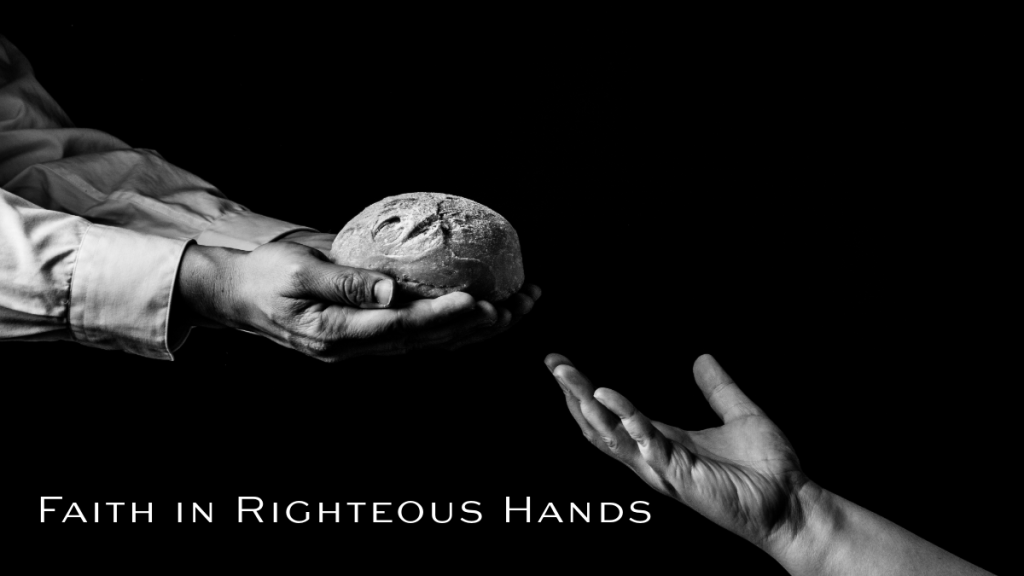
In this episode we consider Hebrews 11:23-31, what do Moses and Rahab have in common? Or Rahab and the children of Israel? Two simple words: “By faith.” We consider how the Lord worked by faith in the lives of Moses’ parents, Moses, the children of Israel, and a prostitute named Rahab.
The Torah portion Vayechi, and he lived, opens with a quiet but powerful statement: Jacob lived. He did not just survive, but that he truly lived, even in Egypt. If we read quickly, we miss it, as this thought is striking. Egypt typically represents exile, compromise, restriction in Scripture, as well as the long descent into bondage that will shape Israel’s future. Yet, Jacob’s final years, paradoxically, are among the most peaceful and fulfilling of his life.
After decades marked by conflict, deception, estrangement, and grief, Jacob is reunited with Joseph, the son he believed dead. His family is preserved from famine, dwelling together in safety. Still, this Torah portion is not sentimental. Jacob knows his days are numbered, and his concern is not his own comfort, but continuity of the covenant family. He understands that faith must be consciously transmitted, especially in seasons of security.
As death approaches, Jacob calls for Joseph and makes him swear an oath: “Do not bury me in Egypt … Carry me out and bury me with my fathers” (Gen. 47:29-30). This is not an incidental request, but a theological one.
On one level, Joseph is the obvious choice. As viceroy of Egypt, he alone has the authority to ensure Jacob’s burial in Canaan; but the deeper reason is more unsettling. Joseph is the most assimilated of Jacob’s sons. He wears Egyptian clothing, bears an Egyptian name, is married into Egyptian society, and has sons born in exile. From a human perspective, Joseph has little incentive to return to the Promised Land or involve his children in the burdens of covenant history.
Jacob understands this danger intimately. He has lived seventeen years with Joseph and surely recognizes the subtle changes that prosperity, acceptance, and assimilation can bring. So Jacob does not just plan his burial; he re-anchors his family in covenant time. He, in essence, forces a question upon Joseph: Where do you belong?
This becomes explicit in Genesis 48, when Jacob adopts Joseph’s sons, Ephraim and Manasseh, as his own. This is a maneuver that carries legal weight in the future of the tribes of Israel, but it is also a pastoral act of healing and prophecy.
Joseph names his firstborn Manasseh, meaning “causing to forget,” because the Lord enabled him to forget the pain of betrayal and suffering he had experienced. His second son is Ephraim, meaning “fruitful,” because the Lord made him fruitful in the land of affliction. These names tell Joseph’s story: healing from trauma and blessing in exile.
Jacob honors this story, but he also reframes it to bring healing.
When Jacob reaches out to bless the boys, he crosses his hands, placing the greater blessing upon the younger son, Ephraim. Joseph objects, assuming a mistake. Jacob insists it is intentional. It is not an act of favoritism, but prophetic foresight.
Jacob knows that Israel is entering a long exile. These are the first sons born in Egypt. Forgetting pain is a gift, but forgetting identity is fatal. Jacob does not deny Manasseh’s blessing, as forgetting sorrow has its place, but the greater blessing belongs to fruitfulness that remembers its source and destination.
In essence, Jacob is saying: healing must never erase calling. Prosperity must never dissolve memory. Blessing must never replace hope for redemption.
This tension remains profoundly relevant. Our faith communities today often wrestle with success, safety, and assimilation. When life becomes comfortable, covenant memory fades. Jacob’s crossed hands remind us that the greatest blessing is not ease, but purpose.
Jacob’s work continues as he blesses all his sons, prophetically situating them within God’s unfolding plan. Two blessings stand out: Judah and Joseph.
From Judah will come kingship and Messiah, as he prophesied that the scepter shall not depart Judah “until Shiloh comes.” From Joseph comes fruitfulness among the nations, echoing the apostolic insight that Israel’s story unfolds alongside the ingathering of the Gentiles (Ro. 11:25). These brothers once stood at odds, one nearly destroyed by the other, are both woven into the redemptive plan of God in Messiah Yeshua/Jesus.
This is covenant time at work: rivalry transformed into cooperation; wounds redeemed into purpose (Ro. 8:28).
The structure of the Torah itself reinforces this message. Vayechi (and he lived) is unique in that it contains no paragraph break from the previous portion, Vayigash. Rabbinic tradition requires breaks between parashot, yet here the text flows uninterrupted. Why? Simply, because covenant history does not stop.
Scripture consistently resists tidy endings. Genesis does not resolve its story; it spills into Exodus. Joseph’s bones do not reach rest until Joshua 24. The Gospels flow naturally into Acts, and Acts ends abruptly, inviting participation. Even Revelation concludes not with finality, but expectancy: “Surely I am coming quickly.” This is not a literary accident. It is theological design.
The Bible is not solely a record of what God has done, it is an invitation into what He is still doing. Covenant time moves forward with purpose, promise, and hope in Christ.
This stands in stark contrast to the Greco-Roman concept of cyclical time, embodied in the myth of Sisyphus, endless repetition without progress or meaning. Covenant time, by contrast, moves toward fulfillment. History matters. Choices matter. Faithfulness matters.
Jacob understood this, and he did not want his descendants to sink into the despair of exile or the emptiness of assimilation, ultimately leading to disappearance. He blessed them with hope, foreshadowing the Spirit of Adoption in his grandsons that Paul will later amplify (Ro. 8:15, 23) as assurance to gentiles in Messiah. But Jacob’s words were not just for their survival, but for destiny.
For us today, Vayechi (and he lives) asks searching questions: Are we living as children of remembrance, or children of forgetting? Do we see our lives as isolated episodes of a sitcom, or as chapters in the Lord’s unfolding story? Do we bless the next generation with comfort, or with calling?
In Messiah Yeshua/Jesus, covenant time continues. Through forgiveness, reconciliation, obedience, and hope, we are still living His story by faith. The road is open, the destination is certain, and the journey matters. Jacob lived, even in Egypt, because he knew where the covenant promise was going. May we always live mindful of His promises.