
Pastoral ministry is not a profession, it is a vocation, even a sacred trust. The apostle Paul, in his farewell to the Ephesian elders, reminds us that the flock we tend was purchased at the highest cost: the precious blood of Messiah. This truth alone should fill every pastor’s heart with trembling reverence and holy resolve.
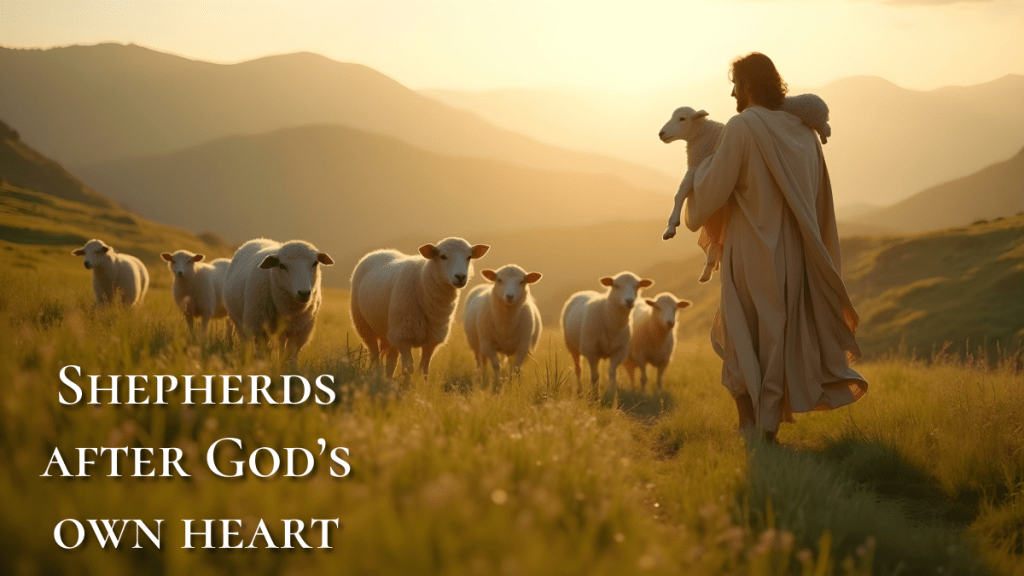
“Take heed to yourselves and to all the flock, among which the Holy Spirit has made you overseers, to shepherd the church of God which He purchased with His own blood” (Acts 20:28).
Our vocation comes by the calling of Christ. Our training by the study of God’s Word, taught by the Holy Spirit, at the feet of proven, elder ministers and teachers. Our principal study is the Word of God, with our mission the tending to and salvation of souls. Keeping always before us this high calling cuts through distractions and vain ambitions. Faithfulness in prayer, worship and devotion will continually draw us back to the two pillars of pastoral vocation: the Word and the care of the soul.
The Anglican Bishop JC Ryle wrote:
“Like the sower, the preacher must sow good seed if he wants to see fruit. He must sow the pure Word of God, and not the traditions of the church or the doctrines of men. Without this, his labor will be vain. He may go to and fro, and seem to say much, and to work much in his weekly round of ministerial duty, but there will be no harvest of souls for heaven, no living results, and no conversions.
Like the sower, the preacher must be diligent. He must spare no pains; he must use every possible means to make his work prosper; he must patiently sow beside all waters, and sow in hope. He must “instant in season and out of season,” he must not be deterred by difficulties and discouragements; “he that observeth the wind shall not sow.” No doubt his success does not entirely depend upon his labor and diligence, but without labor and diligence success will not be obtained (Isa. 32:30; 2 Tim. 4:2; Ecc. 11:4).
Like the sower, the preacher cannot give life. He can scatter the seed committed to his charge, but he cannot command it to grow: he may offer the word of truth to a people, but he cannot make them receive it and bear fruit. To give life is God’s solemn prerogative: “It is the Spirit that quickenth.” God alone can “give the increase” (Jn. 6:63; 1 Cor. 3:7).
Let these things sink down into our hearts. It is no light thing to be a real minister of God’s Word. To be an idle, formal workman in the church is an easy business; to be a faithful sower is very hard. Preachers ought to be specially remembered in our prayers.”
Rabbi Jonathan Sacks, reflecting on leadership, said, “A leader is one who takes responsibility.” In the pastoral context, this means bearing the burdens of the people with compassion, while lifting their eyes to the greatness of God. We are not CEOs or entertainers, we are under-shepherds of the Good Shepherd, entrusted with the care of eternal souls.
Paul’s exhortation in Acts 20 is both sobering and empowering. “The Holy Spirit has made you overseers,” you did not appoint yourself. You were chosen, anointed, and sent. This divine commissioning is not a burden to bear alone, but a grace we walk in daily with the Holy Spirit.
Dear shepherd of God’s people, when the weight of ministry feels heavy, remember: you are not alone. The Chief Shepherd walks with you. The Word you preach is living and active. The people you serve are beloved of God. Your labor is not in vain.
Let your study of Scripture be a sanctuary. Let your care for souls be your joy. Let your leadership be marked by humility, courage, and love. You are doing holy work. You are laboring in His harvest field. You are, and you should prayerfully be, a shepherd after God’s own heart.
Lord, strengthen every pastor who reads this. Renew their vision, restore their joy, and remind them of the sacredness of their calling. May they teach Your Word with clarity, care for Your people with compassion, and lead with wisdom born of a deep relationship with Jesus. Let them feel Your pleasure in daily walk and work. Protect and encourage their families. Give them strength to labor, and wisdom to rest. And may all they do be for Your glory. Amen.
Be encouraged, the Lord knows your heart and commitment.
Maranatha. Shalom.


 the mountain mensch