
The story of Phinehas/Pinchas is fascinating, as it witnesses a change that he could not achieve or gain on his own, but one received by God’s grace. In Numbers 25:10-11 we read:
וַיְדַבֵּר יְהוָה אֶל-מֹשֶׁה לֵּאמֹר
פִּינְחָס בֶּן-אֶלְעָזָר בֶּן-אַהֲרֹן הַכֹּהֵן הֵשִׁיב אֶת-חֲמָתִי מֵעַל בְּנֵי-יִשְׂרָאֵל
“Then the Lord spoke to Moses, saying: ‘Phinehas the son of Eleazer, the son of Aaron the priest, has turned back My wrath from the children of Israel…”
The Torah portion of Pinchas opens with the fruit of a plan designed of Balaam. A leader of Israel, Zimri, commits an act of fornication before the Tent of Meeting with a Midianite woman named Cozbi. Cozbi is likely the daughter of a man of position in Midian, otherwise it is unlikely that she would be identified. As the enemies of Israel found out, Israel could not be cursed by the words of Balaam, so Balaam explains to Balak how to destroy the children of Israel from within by sending in the daughters of Moab to entice with sexual pleasure and idolatry.
Messiah Yeshua/Jesus even refers to this in Revelation 2:14, as He says, “But I hold a few matters against you, because you have those who adhere to the teaching of Balaam, who taught Balak to put a stumbling-block before the children of Israel, to eat food offered to idols and to commit whoring.” Pinchas, taking matters into his own hands, rose up and killed Zimri and Cozbi. This grandson of Aaron and son of Eliezer the current high priest, had not tribal position to execute such a judgment, so the Lord, by His mercy, ensures his safety and posterity.
Pinchas is made a priest. Although he is a son of Eliezer the high priest, and a grandson of Aaron, he, born at the time of the establishment of the priesthood, was not eligible to be a priest. Yet, the Lord confers upon him the priesthood. The rabbis note future high priests descend from Pinchas, and not other descendants of Aaron. Even more, the Lord gives him the אֶת-בְּרִיתִי שָׁלוֹם, “the covenant of peace.” Not only does this covenant of peace witness the peace between Pinchas and the Lord, but this covenant of peace also protects him against those who may want to avenge Zimri. Still, in the Torah scroll the letter ו ״vav״ in the word “שָׁלוֹם/shalom,” meaning peace, is broken, signifying that the eternal covenant of peace will not be established until the coming of Messiah Yeshua/Jesus.
Pinchas will lead Israel into battle in Numbers 31:6 and he is also mentioned as serving the Lord in Judges 20:28. The name פִּינְחָס/Pinchas means “mouth of the serpent,” probably a reference to the shape of his mouth, but it also means “mouth of brass.” Brass representing God’s judgment and atonement. Pinchas rose up and judged the sin of Zimri and Cozbi when the established leadership would not, and turned away the Lord’s anger from the children of Israel, and as Moses records, “because he was zealous for his God and atoned for the children of Israel” (Num. 25:13). Because of this zeal, he was made something he was not.
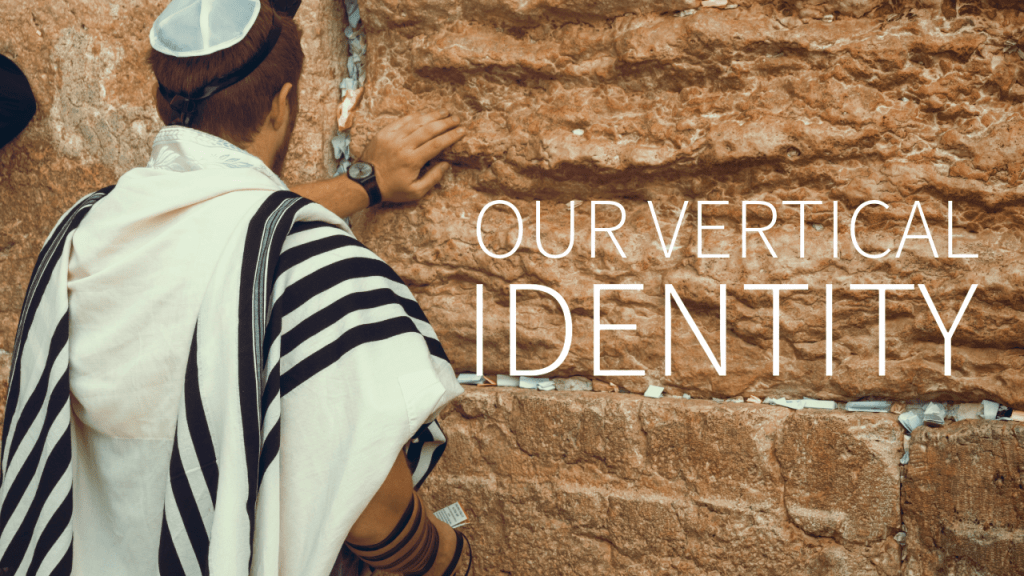
From that moment forward Pinchas had an identity that was not founded in the natural, but from the spiritual. Dear brothers and sisters in Messiah, we cannot, and we will not discover our identity horizontally, upon this earth, but vertically from Christ. In type Pinchas points us to someone greater, Messiah; and the author of Hebrews expounds extensively about this. In Messiah we see that the Judge took the judgment for the wages of sin, the righteous given for the sinner. And now in Him, we are not something – sinners saved by grace and now part of a holy priesthood (1 Pet. 2:9) – because of what we have done. No, we are something wonderfully made in Christ. We are not our past or present struggles; we are in Him. As Paul writes, “Therefore, if anyone is in Christ, he is a new creation. The old has passed away; behold, the new has come” (2 Cor. 5:17). Why? “But by the grace of God I am what I am, and his grace toward me was not in vain. On the contrary, I worked harder than any of them, though it was not I, but the grace of God that is with me” (1 Cor. 15:10).
Pinchas acted because of his love for the Lord. In his mind he probably knew that his own death would result one way or another; but the Lord showed Him extraordinary grace. He protected his life, but He also made him what he was not, a minister of reconciliation at the Altar. In Messiah, again, the Judge took the judgment for us. We are no longer identified in our sin, our shame, our past or our present circumstance. No, dear friends, we are identified in Messiah.
In Messiah Yeshua/Jesus we are more loved than we can fathom. Let that be an encouragement to your heart. You may have been disqualified by birth, but you have been qualified by rebirth in Messiah; and in Him, we now cry out, “Be reconciled to God.” Amen and amen.
Maranatha. Shalom.


 the mountain mensch