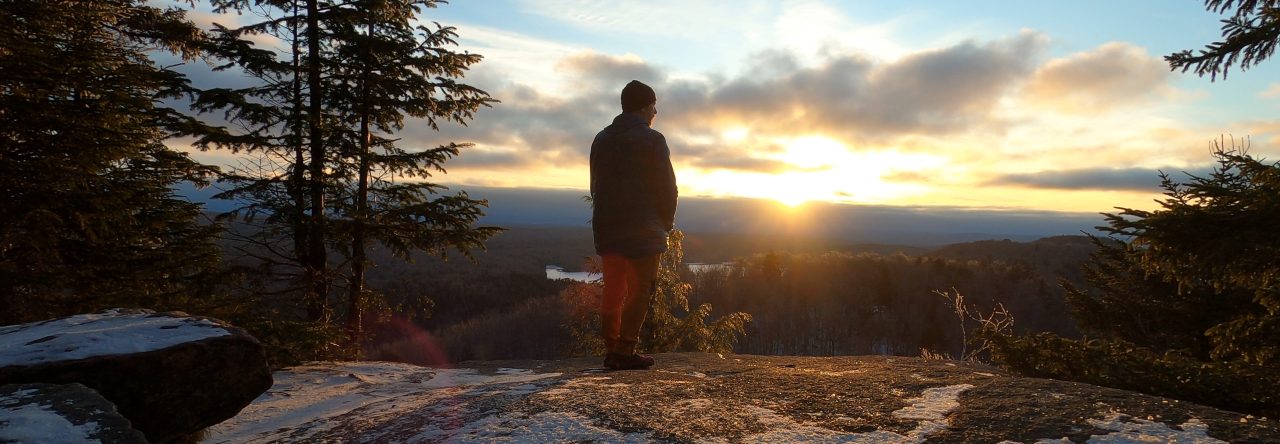
The Wait

This morning I taught a Zoom class for a conference in India. Today’s lesson was part of a longer series on how Messiah Yeshua/Jesus modeled the life of faith for us. I focused on the “lost” eighteen years of His life, the silent years in the gospels. There is so much speculation about those “quiet” years. It is suggested by some that he even traveled to India and studied with the gurus there, however this was not the case.

The “quiet” years were His waiting years; but waiting does not mean He was inactive. During those years, Yeshua/Jesus lived a normative Jewish life for His time, filled with family, community, and covenant. He learned, He prayed, and He traveled to work as a laborer (carpenter) where He was needed. Remember, He is identified as “the carpenter” (Mk. 6:3), and as the son of the carpenter (Matt. 13:55; Mk. 6:3). This was hard work. Yet, it allowed Him to see and experience the sights and sounds of His people, their lives, their struggles, their joys, and their faith. He learned to speak with them, relate to them, and wait with them.

Still, Yeshua was aware of His own wait, we do not know how specifically, but He was, as we read in John 2:4, 7:6 and 7:30 statements expressing: “His time had not yet come.” He had to wait for the time appointed by the Father to begin His ministry.

Many of us are waiting, have been waiting, or know what it is to wait upon the Lord’s timing. One lesson that we often overlook from Jesus is His wait. His faithful wait teaches us how to wait faithfully. As Jesus waited: He lived, He learned, He labored, He worshiped. He didn’t sit and brood. He remained faithful to the Father during years of waiting.

It can be a frustrating experience, especially when we believe we are ready to advance in the race. I submit, if we find ourselves frustrated, self-isolating, questioning Him and His love, and jealousy takes root in our hearts for how He is using others, then He is still preparing (conforming) us as we wait.

However, the wait is NOT inactive. We are still about our Father’s business, as we are called to be faithful in all things: “One who is faithful in a very little is also faithful in much, and one who is dishonest in a very little is also dishonest in much” (Lk. 16:10).

We should remember these three things while we wait: 1) we are not separated from Him in the wait; 2) the wait is always active; 3) we must celebrate His control even in the wait (Thy will be done…).

I acknowledge the struggle of waiting, but I rejoice in His wisdom. To be transparent, I am grateful that what I believed I was prepared for years ago He did not permit me to enter, as He knew the depth of difficulty to come that I was not prepare for. His timing, not ours, is perfect. As the psalmist encourages: “Be still before the Lord and wait patiently for him…” (Ps. 37:7).

Jesus gave us the example during those eighteen “quiet” years living as a laborer, doing those menial tasks that few consider, even while “increasing in wisdom and stature, and in favor with God and men.” He did not rush His calling, or the broadening of His calling, and neither can we. We trust and serve the Lord as He has sets us in each season of our lives.

I pray this encourages you in your wait.

Maranatha. Shalom.

Bamidbar: Torah 34

Tap pic for link!

The Lord commands Aaron and Moses to count the children of Israel in the wilderness in a beautiful and profound way. What does this mean for us today? How does the opening of the book of Numbers minister to our life of faith in this era? There is an encouraging and meaningful message from this opening portion of Numbers, give a listen! 

In the Wilderness

The wilderness is a great leveler. Whether the wilderness is physical or spiritual, no matter the view we have of ourselves, the wilderness does not care, it must be approached with care. On my many trips into the heart of the Adirondack Mountains of New York, I cannot recount the number of times when the young, fit and overly zealous backwoods athlete either hobbled out of the wilderness, or were carried out by park rangers. See, the wilderness does not care, it is where we are humbled.

The Torah portion of בְּמִדְבַּר/Bamidbar, “in the wilderness,” begins:

וַיְדַבֵּר יְהוָה אֶל־מֹשֶׁה בְּמִדְבַּר סִינַי בְּאֹהֶל מוֹעֵד

“And the Lord spoke to Moses in the wilderness of Sinai in the Tabernacle of the congregation…” (Numb. 1:1).

The Torah was given in the wilderness, from Mt. Sinai and down on the valley floors. Out there in the wilderness anger, fear, frustration, rebellion, hunger, thirst, sacrifice, revelation, and even faith happened. The Sinai wilderness, a harsh, prickly and hated land, was the very place where the Lord brought His people to begin His renewal of them.

The portion called Bamidbar (Numb. 1:1-4:20) is usually read the week preceding the celebration of Shavuot, the feast of weeks. Why? In order to receive divine revelation (remembered on the feast of weeks), we must become empty in order to receive, as it says in Bamidbar Rabbah 1:7, “The Lord spoke to Moses in the wilderness of Sinai” – it is, that anyone who does not render himself like a wilderness, accessible to all, is unable to acquire wisdom and the Torah. That is why it is stated: “In the wilderness of Sinai”

What is this speaking of? Humility. Paul writes, “For by the grace given to me I say to everyone among you not to think of himself more highly than he ought to think, but to think with sober judgment, each according to the measure of faith that God has assigned” (Ro. 12:3). Even more, “Do nothing from selfish ambition or conceit, but in humility count others more significant than yourselves” (Phil. 2:3).

Where the wilderness does not care, the Lord who meets us there does. Therefore, we should not only care, but we should, as Messiah taught, “Do unto others as you would have them do unto you; for this is the law and the prophets” (Matt. 7:12).

So many of the commandments of the Lord require us to hear, see and respond to the needs of the community. If we are arrogant, selfish, or narrowly focused we miss His revelation, and the people who need us to respond.

The wilderness may be fraught with potential difficulty, but there in the wilderness a meeting happens. Between the Lord and His people, and in that meeting we discover an oasis in the desert, help in the harsh conditions, fruit in the dry places of life. Why?

His Word is the promise, and His Word is fruitful in the lives of His renewed people. The wilderness, in His view, is not a place of isolation, but intimacy. It is not a destination, but a vital part of our journey with Him. It is out there, in that wilderness, where He sets us in order, where he opens us to hear our fellow, breaking a spirit of isolation in a place often thought to be isolating. Out there we taste and see that He is good (Ps. 34:8.)

Finally, it is in that isolated wilderness where we recognize that we matter to Him. How? There He counts us. When Israel was counted in the wilderness, the rabbis teach that each member of the tribes had to be counted face to face, with a leader learning the name of each person. See, where we believe we are isolated and alone, is right where we are counted, and in being counted, we are known to the greatest leader of all, Yeshua/Jesus.

Messiah meets and prepares us in wilderness spaces, and there He calls us to community … by name. You matter saints.

Maranatha. Shalom.