
Jacob has lived in Egypt for seventeen years, and the Lord was with him. As his days become few, he begins to speak into the lives of his sons. The Torah says:
וַיִּקְרָא יַעֲקֹב אֶל־בָּנָיו וַיֹּאמֶר הֵאָסְפוּ וְאַגִּידָה לָכֶם אֵת אֲשֶׁר־יִקְרָא אֶתְכֶם בְּאַחֲרִית הַיָּמִים
“Then Jacob called his sons and said, “Gather yourselves together, that I may tell you what shall happen to you in days to come” (Gen. 49:1).
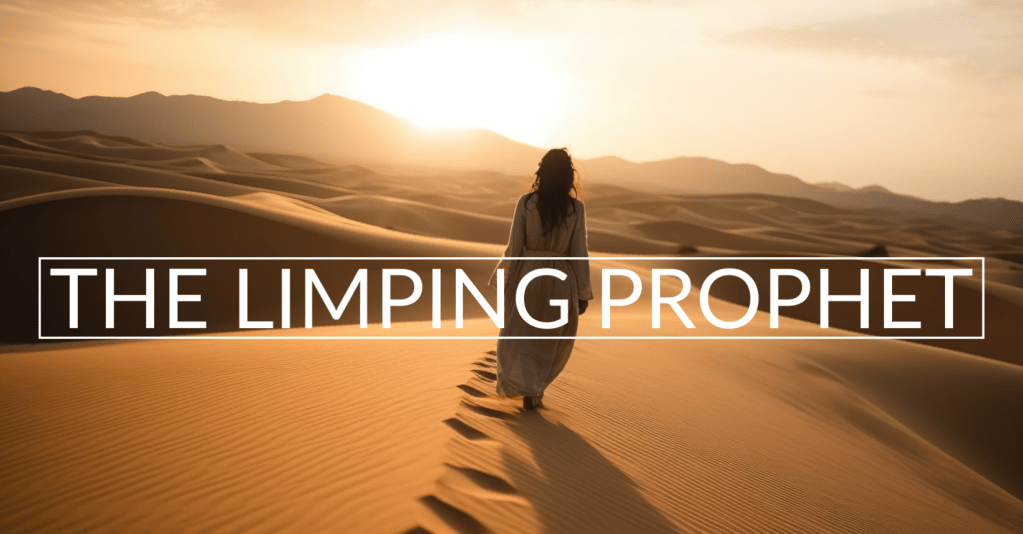
The words translated above, “in days to come,” means, “in the last days.” There is a rabbinic teaching that says the Lord showed Jacob all that would befall his sons, and how He would fulfill His covenant with Israel. Jacob desired to share this, but was restrained. He shared what he could see in part, but not in full (1 Cor. 13.9-10).
What did Jacob, this limping prophet, accomplish by sharing in part? In Genesis 48 we find Jacob blessing Joseph by demonstrating the “spirit of adoption” (Ro. 8:15). Manasseh and Ephraim were not sons of Jacob, but through the spirit of adoption, they became as his sons, equal to Joseph’s brothers. And by this adoption, Jacob set the fruitfulness (Ephraim) over the forgetfulness (Manasseh). Granting them rights of inheritance in the Promised Land.
But what of Jacob’s sons? The words found in Genesis 49 are prophetic, they are part of the whole. Jacob knew the deep valleys his family would traverse, but to share the fullness of that may leave them hopeless. So the Lord, by His grace, spoke through Jacob in part. And what was the end result?
They have a future.
At times we become so caught up in finding the meaning of a prophetic text, that we miss the obvious: there is a future.
While they are away from the Promised Land, under the protective covering of Joseph, it may seem that Israel’s end is in Egypt. No. As Jacob saw, Israel’s end is with God, but not lost among the nations, but with the nations before the Throne and the Lamb (Rev. 7:9).
Jacob’s words, as opaque as they are, relay life, hope, and covenant fulfillment. As Jacob prepares to rest, he prepares his sons for life without him, while safely in the care of the covenant Lord.
How deep and dark the valleys of life can be (Ps. 23:4)? But what is the promise attached to Psalm 23:4? “I will fear no evil. For You, the Lord, are with me.” You, Lord are with us: Emmanuel.
At times it can see that we are lingering in Egypt, a foreign land, separated from the promises of God. But in those times, we need to remember that, as with Abraham, Isaac and Jacob, we, as they, may graduate “in faith, not having received the things promised, but having seen them and greeted them from afar, and having acknowledged that they were strangers and exiles on the earth” (Heb. 11:13). If this be our end, is He unfaithful? Heaven forbid! We are caught up in a greater promise, and a greater end.
This limping prophet, Jacob, died in a foreign land, but rested in the promise as he spoke God’s promises into his son’s lives. And as Joseph himself would prophesy at the end of His life, “Then Joseph made the sons of Israel swear, saying, “God will surely visit you, and you shall carry up my bones from here” (Gen. 50:25).
“God will surely visit you,” and take you from this land, as He promised Abraham (Gen. 15), and when He does, take me with you. Did they? Yes: “As for the bones of Joseph, which the people of Israel brought up from Egypt, they buried them at Shechem, in the piece of land that Jacob bought from the sons of Hamor the father of Shechem for a hundred pieces of money. It became an inheritance of the descendants of Joseph” (Josh. 24:32).
This limping prophet spoke life when life was far from perfect. All of us who have done some God wrestling limp after He touches us. What do we do with the limp? We rely on Him, and speak life into others. The slowness of the walk and the reliance on His Word causes us to see life, past, present and future, differently. We see it in light of Him. The finish is yet ahead, but we speak life to those along the way to it.
Being a limping prophet isn’t disqualifying, as a matter of biblical fact: it is the sign of qualification in living relationship with Him. How then do we walk? Leaning on the everlasting arms of the Yeshua/Jesus, Who is with us “even to the end of the age” (Matt. 28:20), even as He was in Egypt with Jacob as he spoke of: “the last days.”
Be well. Shalom.
 the mountain mensch