Hike Date: October 23, 2020
Destination: North Branch Mountain
ADK Location: Silver Lake Wilderness
Roundtrip Mileage: 10 +/-
Elevation: 2738 ft.
Elevation gain: 888 ft.
As in my previous Trails-less Traveled post, this trailhead is one that I have passed frequently. After my visit to Chub Mountain, I decided to investigate other mountains nearby. As I examined my map I noted Sherman Mt., and North Branch Mountain. While there is a trail that leads in their general direction, neither of these mountains have trails to their summits. A perfect place to fine tune some bushwhacking skills. For those who don’t know, a bushwhack is a means of travel that uses map, compass, GPS, and natural landmarks to navigate to a destination where either there are no trails, or you desire to approach from a different direction.
My original plan was to head directly out to North Branch Mountain, which would require about 1.5 mile bushwhack from the end of the trail at the wetland to reach the summit.
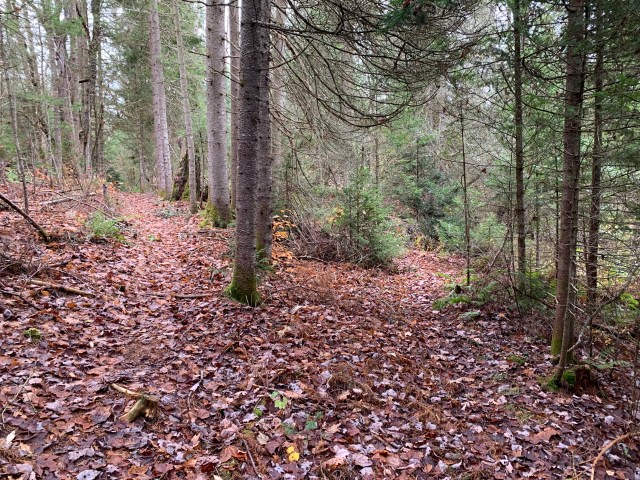
I arrived at the trailhead a little later than expected, around 8:45am. I intended to make up the time delay, and move a bit faster while on trail. The first mile or so of the trail has numerous junctions and offshoots that are not indicated on the map, which shows only one junction. With my compass and map, and using my compass and landmarks, I was able to resolve directional issues rather quickly. Yet, I realized that I would probably only get North Branch Mountain on this day, and would have to leave Sherman for another time, as I had an afternoon appointment at my office before Friday evening Shabbat service. So, North Branch it was.

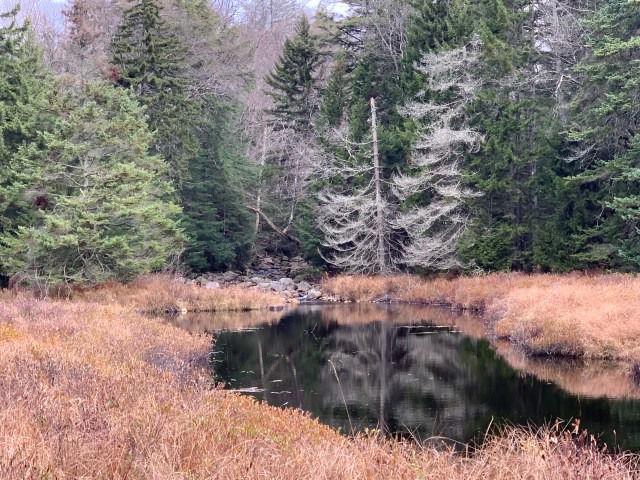
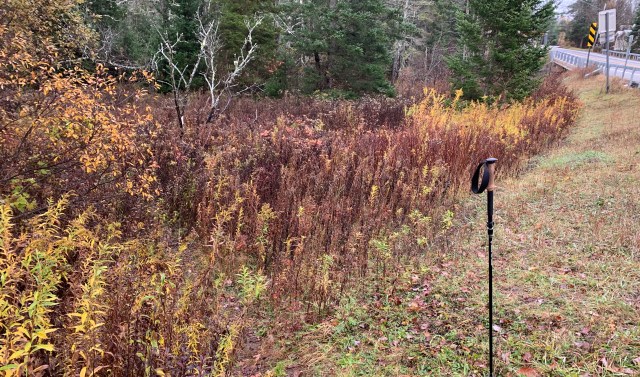
I made steady progress to the terminus of the trail indicated on the map, just on the edge of a wetland area; this wetland area would be my baseline landmark for navigating out and back. When you reach the end of the trail, you can see the beginning of North Branch Mountain off in the distance. With the water level low I was able to keep to one side, and then turn into the woods and begin the bushwhack. With the bearing set on my compass, and seeing the faint tracks of another hiker from the day before, I was heading in the right direction. In about .4 of a mile I began my ascent up the steep side of the mountain.
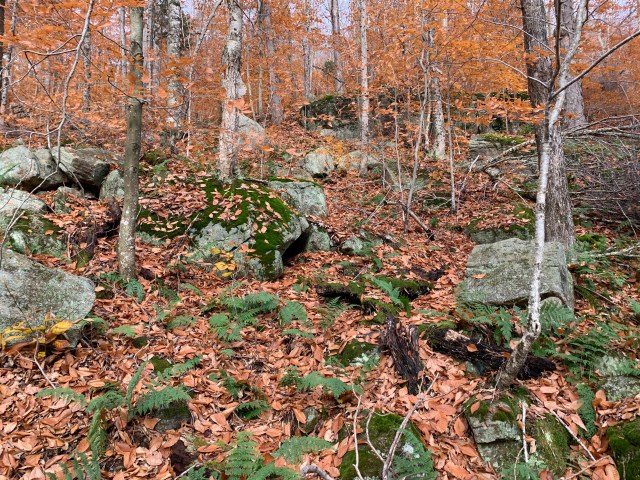
Fallen leaves, on top of wet rocks and mud, can be almost as bad as ice. It had been a rainy week, so the ground was wet. Steady progress up. The summit is wooded, as expected. This trek, however, was not about the views from a summit, but the bushwhack itself. Plotting a course, taking a bearing, identifying landmarks from the map in the field, and safely completing the bushwhack portion of the trek.
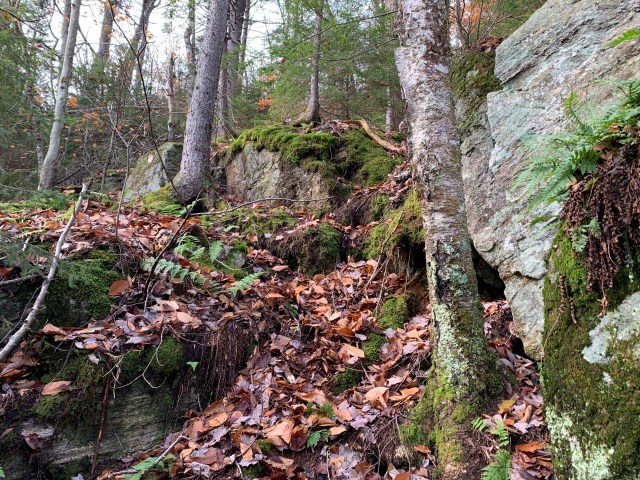
As I descended from the summit I decided to bend toward the draw and follow the drainage down. I knew that this would deliver me about 100 yards from where I began my ascent. Knowing that at the base I would turn right, now following a reverse azimuth, I would begin to listen for the sound of the river that would deliver me back to the wetland where I began my bushwhack.


Dialing in map and compass skills, and identifying geographic features and sounds, noting positions, etc., is key to returning safely from a bushwhack. At one point on my way back, having forgotten that the drainage took me further east than I anticipated, I stopped, had a drink and said, “I think I’m lost.” No. Checking my compass, I was right on track. In fact, I was about 50 ft. from the break in the trees that would allow me to walk along the side of the wetland, the exact spot I passed through earlier. Trusting your tools, once you know how to use them, is vital.
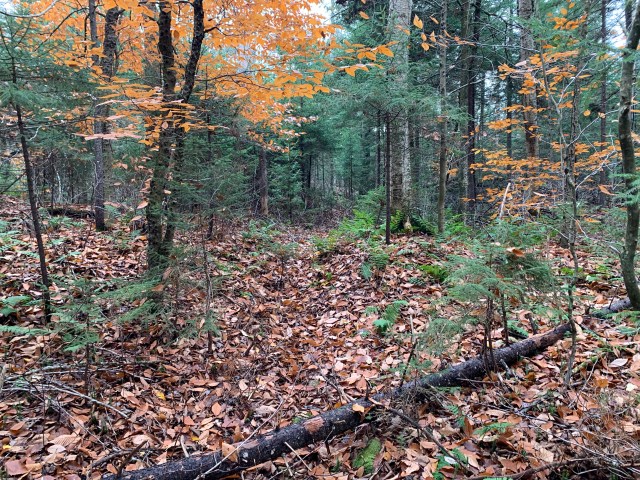
The way out was relatively uneventful, but enjoyable nonetheless. This was the longest intended bushwhack I had done, about 3 miles total. I took my time heading out, stopping to admire the river, the beaver huts and dams, and have a snack or two.
Overall, an excellent, short hike in an area not heavily trafficked. I plan to visit again to snowshoe, and explore a little further into the wild.

Next time, Sherman Mountain.



 the mountain mensch