
Not everything in the life of Paul, an apostle of Messiah, was glory clouds and rainbows. We often celebrate the triumphant end of his race, the crown laid up for him by Yeshua/Jesus. But the years, months, and even weeks leading to his upward “graduation” were marked by pain, pressure, and profound heartache. Writing from Corinth to the disciples in Rome, Paul reflects not only on the glory of Messiah, but on the weight of his own lived experience. He declares: “For I consider that the sufferings of this present time are not worthy to be compared with the glory which shall be revealed in us” (Ro. 8:18).
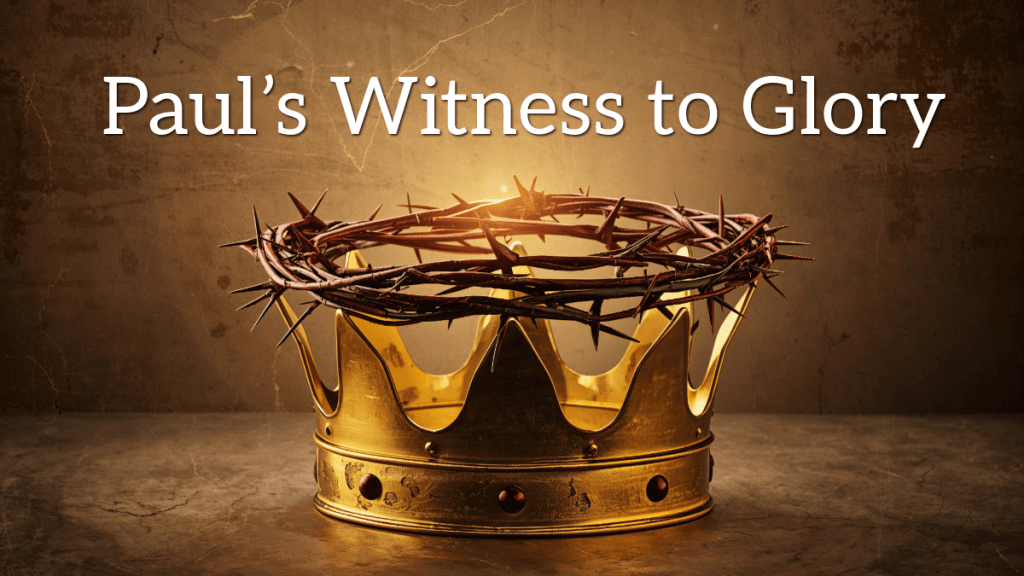
Paul was not speaking theoretically. His catalog of suffering is well known: beatings, shipwrecks, stoning, lashes, rejection, false accusations, gossip, hunger, sleeplessness, and constant concern for the congregations (2 Cor. 11:23–28). Yet he insists that all of these tragedies pale beside the glory that is coming for the saints of God in Messiah.
Later in Romans 8, Paul widens the lens. He reminds his readers that the things they endure, and the things he endures, are not random. They are being worked together. The image is that of a potter at his wheel, gathering clumps of clay that seem disconnected, even scattered, and shaping them into something purposeful and beautiful: “And we know that all things work together for good to those who love God, to those who are the called according to His purpose” (Ro. 8:28).
Paul is not offering a blanket promise to humanity. He is describing a particular people, a peculiar people, those who love God and are called according to His purpose. The saints. In Greek, ἅγιος /hagios, those set apart, consecrated, pliable in the hands of God. In Hebrew, קָדוֹשׁ / kadosh, those separated from the common, dedicated unto, and cleansed for sacred use.
For this people, God takes “all things,” the beautiful and the brutal, and works them together with His own hands. Why? Because He is conforming His people into the likeness of His Son. Paul continues: “For whom He foreknew, He also predestined to be conformed to the image of His Son, that He might be the firstborn among many brethren” (Ro. 8:29).
Messiah Himself suffered beyond our comprehension. And Scripture is clear: those who follow Him will share in His sufferings (1 Pet. 4:13; Phil. 3:10; Matt. 16:24). But this is not a message of despair, it is a message of hope. Paul writes elsewhere: “For as the sufferings of Messiah abound in us, so our consolation also abounds through Messiah” (2 Cor. 1:5). The comfort outweighs the suffering. The consolation exceeds the cost. The glory eclipses the present grief.
Paul’s life becomes a living testimony: faithfulness in affliction, endurance in despair, steadfastness in pain. And his message to us is the same one he preached to Rome: What will be revealed in you, to the glory of the Father, is far greater than what you are enduring right now. Every uncertainty, every fear, every failure, every heartache, every betrayal is being gathered into His hands. The Potter is at work; and the vessel He is forming will shine with the glory of His Son.
Maranatha. Shalom.
 the mountain mensch